
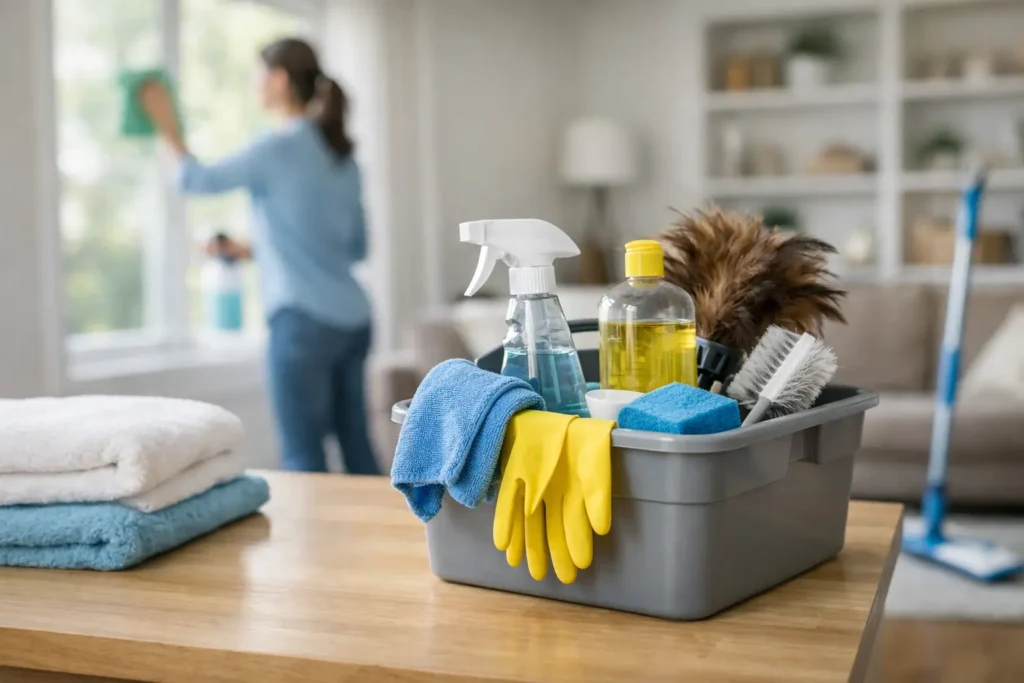
A home rarely gets messy all at once. More often, it happens in small, easy-to-miss stages – breakfast dishes left in the sink, washing building up on a chair, bathroom surfaces losing their shine, crumbs gathering where nobody looks until the weekend. The best cleaning routine for home life is the one that stops those small jobs turning into a full-day catch-up.
For most households, that means keeping things simple, realistic and repeatable. A good routine should fit around work, school runs, shopping and everything else competing for your time. If your plan is too ambitious, it usually lasts a week. If it is clear and manageable, it becomes part of the week without much thought.
What makes the best cleaning routine for home use?
The answer depends on the size of the property, how many people live there and how quickly mess builds up. A family home with children and pets needs a different approach from a one-bedroom flat occupied by a single professional. A landlord preparing for new tenants needs a much sharper standard than somebody just trying to stay on top of day-to-day dust.
Still, the strongest routines all follow the same principle: clean little and often, then schedule deeper jobs before they become a problem. That keeps standards steady and reduces the need for exhausting all-day cleans.
A practical routine usually works on three levels. Daily jobs control clutter and hygiene. Weekly jobs reset the main rooms. Monthly or occasional jobs deal with the areas that do not need attention as often but make a big difference when handled properly.
Start with the rooms that affect daily life
If you try to treat every room as equally urgent, the routine quickly becomes hard to stick to. Focus first on the spaces people notice and use most – the kitchen, bathrooms, living area and main bedroom. These rooms shape whether a home feels clean, even if a spare room has not been touched for two weeks.
The kitchen should be tackled every day because it collects grease, food waste and bacteria quickly. Wiping worktops, clearing the sink, loading or emptying the dishwasher and giving the hob a quick clean can prevent bigger jobs later. Floors matter too, especially if people eat on the go or children drop food regularly.
Bathrooms also need frequent attention. A fast wipe of the basin, taps, toilet seat and mirror keeps things presentable and more hygienic. If you leave soap marks, toothpaste splashes and moisture to sit for days, the clean-up becomes harder and the room starts to feel neglected.
Living rooms and bedrooms are more about maintenance than constant scrubbing. Putting items back where they belong, folding throws, removing cups and opening windows for fresh air can make a room feel cleaner immediately. That is worth more than many people realise.
A daily routine that is actually manageable
Daily cleaning should not mean spending hours with a mop and bucket. In most homes, 15 to 30 minutes is enough if you focus on the right jobs. The aim is not perfection. It is control.
Make the bed in the morning, clear dishes after meals, wipe kitchen surfaces after cooking and do a quick bathroom check before the day ends. If something takes under two minutes – hanging up coats, putting shoes away, rinsing the sink, wiping a spill – do it there and then. That one habit cuts down a surprising amount of weekend work.
It also helps to do one load of washing regularly rather than letting it build into a mountain. For busy households, laundry is often the task that makes a home feel chaotic fastest. Staying ahead of it changes the whole feel of the space.
If evenings are packed, split the work. Do the kitchen after breakfast and the bathroom and tidy-up later in the day. The best routine is not always one set block of cleaning. Sometimes it is a few short resets spread across the day.
A weekly cleaning plan that keeps standards high
Weekly cleaning is where you move beyond surface control and deal with the dust, dirt and build-up that daily wipes will miss. This is the time to vacuum thoroughly, mop hard floors, change bed linen, clean the shower or bath properly and dust surfaces that get overlooked during the week.
Many people find it easier to assign jobs to certain days. For example, bathrooms on Monday, bedrooms on Tuesday, floors on Wednesday and kitchen appliances on Thursday. Others prefer one focused cleaning session on a Saturday morning. Neither method is automatically better. It depends on your working pattern and energy levels.
The trade-off is simple. Spreading jobs across the week makes each session shorter, but it requires consistency. Doing everything in one go keeps the schedule straightforward, but it can take a large bite out of your weekend. If you know you are unlikely to clean after a long workday, a weekend reset may be more realistic.
Weekly jobs worth prioritising
Some weekly jobs give more visible value than others. Vacuuming high-traffic areas, changing towels and bed linen, sanitising bathroom touchpoints, cleaning the microwave and taking out rubbish and recycling on time all help a home feel under control. Skipping them for a week may not seem serious, but letting them slide repeatedly is usually what leads to that overwhelming feeling.
Windows, skirting boards and inside cupboards can wait longer. Floors, bathrooms and food-preparation areas usually cannot.
Monthly and seasonal tasks stop bigger problems
A routine falls apart when deep-clean jobs are ignored for too long. Even well-kept homes need occasional attention in places people do not clean every week. Ovens collect grease, carpets trap dust, upholstery holds odours and limescale slowly builds in kitchens and bathrooms.
This is where monthly or seasonal planning matters. Rotate the bigger jobs so they do not land at once. One month, clean interior windows and skirting boards. The next, tackle the oven and fridge. After that, focus on carpets, under furniture and storage areas.
There is no need to force every deep-clean task into a monthly schedule if the home does not need it. A single adult in a tidy flat may not need frequent carpet cleaning. A busy family with pets may need it far more often. It depends on use, traffic and how quickly the property loses freshness.
When a routine is not enough on its own
Some situations call for more than maintenance cleaning. End of tenancy cleaning, after builders cleaning, move-ins, pre-sale preparation and spring cleans usually need a more intensive standard than a normal household routine can provide.
This is also true when life gets busy. If work has taken over, guests are due, or you have simply fallen behind, bringing in professional help can reset the property properly. Once the home is back to a strong baseline, it becomes much easier to maintain with a simple weekly plan.
For households in Birmingham that want reliable support without juggling multiple providers, using one cleaning company for regular visits and one-off deep cleans can save time and keep standards consistent. That is often more practical than trying to patch together different services as problems come up.
How to make the best cleaning routine for home life stick
Most routines fail because they ask too much of people who are already busy. The fix is not usually better products. It is a better system.
Keep supplies where they are used. Store bathroom cleaner in the bathroom, kitchen cloths in the kitchen and spare bin bags where they are easy to reach. If every task begins with hunting for products, jobs get delayed.
Set a minimum standard for each room. That could mean clear worktops in the kitchen, an empty bathroom bin, a vacuumed lounge floor once a week and clean bed linen every Sunday. Once the standard is clear, it is easier to spot what needs doing and easier to share tasks across the household.
Be honest about what you will maintain yourself and what you would rather outsource. There is nothing efficient about planning an oven clean you will avoid for six months. If a specialist job keeps getting pushed back, booking it is often the more sensible option.
A good cleaning routine should make home life easier, not become another source of pressure. Start with the tasks that matter most, keep the pattern realistic, and adjust as your household changes. The right routine is the one you can keep going even during a busy week.