
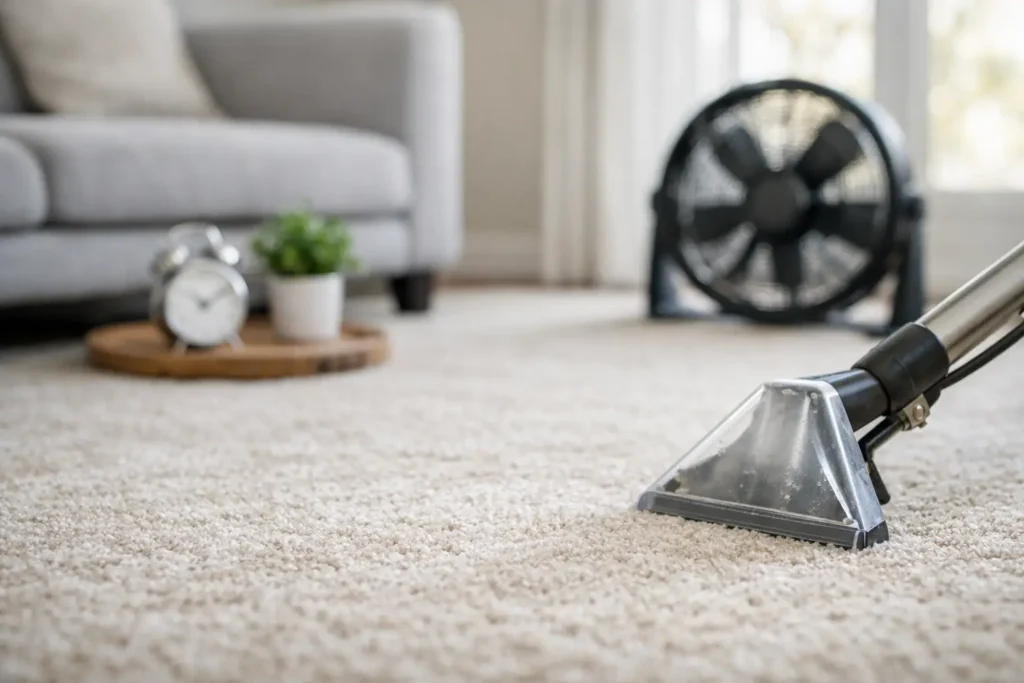
You have just had your carpets cleaned, the room already looks fresher, and then the practical question arrives – how long does carpet cleaning dry? For most homes and businesses, the answer is usually between 4 and 12 hours, but that range can shift depending on the cleaning method, the carpet type, airflow, heating, and how much moisture was used during the job.
That matters because drying time affects everything after the clean. You may be planning when the children can use the lounge again, when office staff can move furniture back, or whether tenants can walk through a property without leaving marks. A good clean is only part of the job. Drying properly is what helps the carpet look right, smell fresh, and stay in good condition.
How long does carpet cleaning dry in most cases?
In straightforward terms, a lightly damp carpet cleaned with low-moisture methods can dry in around 2 to 4 hours. A hot water extraction clean, which many people still call steam cleaning, more often takes 6 to 12 hours. In some cases, especially with thicker pile carpets, poor ventilation, or cold weather, it can take up to 24 hours.
This is why there is no single drying time that suits every property. A small, warm room with good airflow will dry far faster than a large bedroom in winter with the windows shut. Equally, a carpet that needed a heavy deep clean because of pet accidents, tracked-in dirt, or end of tenancy build-up may hold more moisture than one cleaned as part of regular maintenance.
If you are booking carpet cleaning around your day, it is safest to assume most carpets will need the better part of the day to dry fully. If speed matters, ask in advance which cleaning method is being used and whether faster-drying options are available.
What affects carpet drying time?
The biggest factor is the cleaning method itself. Hot water extraction pushes water and solution into the carpet and then removes it with strong suction. Done properly, it gives excellent results, but the carpet will still be left damp. Low-moisture cleaning uses far less water, so drying is usually quicker, though it may not be the right option for every carpet or level of soiling.
Carpet thickness also plays a part. A short, tight pile in a hallway usually dries more quickly than a deep, plush carpet in a bedroom. Underlay matters too. Even if the top feels nearly dry, the layers below can still be holding moisture.
Airflow changes everything. Open windows, internal air movement, extractor fans, and decent ventilation all help moisture leave the room. If the space is stuffy, drying slows down. Heating can help, but only if it is balanced with airflow. A warm room with no ventilation can feel dry without actually drying the carpet efficiently.
Weather and season matter more than many people expect. In warmer months, carpets generally dry faster because the air can carry moisture away more easily. In colder or damp conditions, especially during a Birmingham winter, carpets often need longer.
Finally, the skill of the cleaner makes a real difference. Professional equipment with strong extraction removes far more water than basic hire machines or smaller domestic units. That can cut hours off the drying time.
Different cleaning methods and what to expect
Hot water extraction is one of the most effective ways to deep clean carpet fibres. It is popular because it removes built-up dirt, allergens, and residue well, especially in family homes, rental properties, and commercial settings with heavier footfall. The trade-off is longer drying time, usually around 6 to 12 hours.
Low-moisture cleaning is faster. Depending on the system used, carpets may be ready in 1 to 4 hours. This can suit offices, managed properties, and households that need rooms back in use quickly. The trade-off is that it may not always be the best fit for heavily soiled carpets that need a more intensive deep clean.
Shampoo cleaning can also leave carpets wetter for longer if too much product or water is used. It is less common now in professional settings where efficient extraction and quicker turnaround are priorities.
The best method depends on the carpet, the condition it is in, and how quickly you need the room back. Faster is useful, but the right result matters more than choosing the shortest drying time on paper.
When is it safe to walk on the carpet?
In many cases, you can walk on the carpet while it is still slightly damp, but only with clean socks or overshoes if the cleaner recommends it. Outdoor shoes should stay off until the carpet is dry. Wet fibres attract dirt more easily, and walking grit back onto a freshly cleaned carpet defeats the point.
If furniture is going back in, it is better to wait until the carpet is mostly dry. Heavy items placed on damp carpet can cause marks, trap moisture, or in some cases affect wooden furniture legs. If furniture must be replaced sooner, protective tabs or blocks are often used to reduce the risk.
For homes with children or pets, it makes sense to be cautious. Even if the surface feels dry, there may still be moisture lower in the pile. Giving it a little longer is usually worth it.
How to speed up carpet drying
If you need the carpet ready as soon as possible, a few simple steps can help. Open windows if the weather allows it and create airflow through the room. Use fans to move air across the carpet rather than directly down into one spot. Keep the room warm, but not overly humid.
Try not to close the room up immediately after cleaning. Still air slows the whole process. If you have central heating on, combine it with ventilation rather than relying on heat alone. In some cases, a dehumidifier can help, particularly in colder months or in rooms that do not ventilate well.
It also helps to clear the area properly before cleaning starts. If the technician can work efficiently without stopping to move smaller items, the process is usually more controlled and consistent. Better extraction during cleaning often means less moisture left behind at the end.
Why some carpets stay damp too long
A carpet that is still wet the next day does not always mean something has gone wrong, but it can be a sign that conditions are working against it. Thick carpet, dense underlay, heavy cleaning, poor ventilation, and cold weather all add time.
That said, over-wetting is a real issue when cleaning is done with poor equipment or by someone without the right technique. Too much water and not enough extraction can leave carpets unpleasantly wet rather than just damp. This is one reason many customers prefer trained professional cleaners over DIY hire machines. The result is not just about getting stains out. It is also about leaving the carpet in a usable condition afterwards.
If a carpet is staying damp for too long, increase airflow first. If there is a strong smell, visible patchiness, or concern that moisture has reached the underlay and is not drying, it is worth speaking to the cleaning company promptly.
How drying time affects homes, tenancies, and businesses
For homeowners, drying time is mainly about convenience. People want the room back, furniture in place, and daily life moving again. For tenants and landlords, timing can be more important, especially during move-out or move-in windows where decorators, inventory clerks, or new occupants are due.
In commercial spaces, a slow-drying carpet can disrupt the working day. Offices, reception areas, and meeting rooms often need cleaning planned around access and reopening times. That is why clear expectations matter before the job begins.
A dependable local provider should be able to explain likely drying times based on the property, not give a vague one-size-fits-all answer. If you are arranging carpet cleaning in Birmingham and need quick turnaround, ask directly how the drying time will fit around your schedule.
A realistic answer most people can use
If you want the practical version, plan for 6 to 12 hours in most cases and treat anything quicker as a bonus. If your carpet is lightly cleaned with a low-moisture method, it may be ready much sooner. If it is a deep clean on a thick carpet in cool weather, allow longer.
The key is not just how fast it dries, but how well it has been cleaned and how professionally the moisture has been managed. A carpet that dries properly stays fresher, looks better, and is easier to return to normal use without hassle.
If you are booking a clean, ask the question upfront, prepare the room well, and give the carpet the time it needs. A few extra hours of drying is a small price to pay for a carpet that feels properly clean when you walk back into the room.