
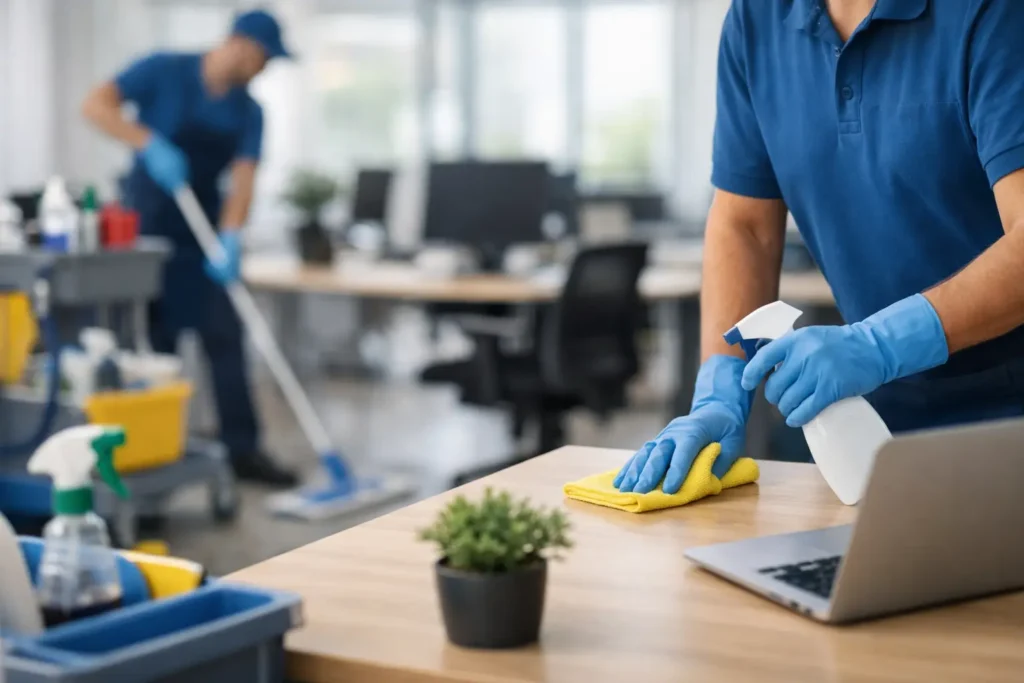
Walk into an office on Monday morning and you can usually tell straight away whether the cleaning schedule is working. Bins are full, desks are dusty, kitchen surfaces are marked, and the toilets already feel tired before the week has properly started. If you are asking how often should an office be cleaned, the short answer is this: most offices need some cleaning every day, with deeper cleaning carried out weekly, monthly, and at set points through the year.
The longer answer depends on how your office is used. A five-person admin space will not need the same attention as a busy call centre, shared workspace, estate agency, or clinic reception. The right frequency is based on footfall, facilities, working patterns, and the standard you want clients and staff to experience.
How often should an office be cleaned in practice?
For most businesses, office cleaning works best in layers rather than as one big job. Daily cleaning keeps hygiene and presentation under control. Weekly cleaning deals with the build-up that staff notice but may not mention. Periodic deep cleaning handles the jobs that protect carpets, furniture, appliances, and overall standards over time.
If your office has toilets, a kitchen, meeting rooms, and regular visitor traffic, daily cleaning is usually the sensible minimum. If the space is occupied only a few days a week by a small team, you may be able to reduce full cleans to two or three visits weekly, provided washrooms and touchpoints still get enough attention.
This is where many businesses get caught out. They assume cleaning frequency should be based on square footage alone. In reality, usage matters more than size. A compact office with constant traffic can need more frequent cleaning than a larger space with fewer people.
The areas that usually need daily cleaning
Some parts of an office do not give you much flexibility. Toilets, washrooms, kitchen areas, reception spaces, and high-touch surfaces generally need attention every working day. These are the first places staff and visitors judge, and they are the quickest to become unhygienic.
Daily cleaning should usually include emptying bins, wiping and sanitising desks and shared surfaces where agreed, cleaning kitchen counters and sinks, checking washrooms, mopping hard floors in busy areas, and disinfecting touchpoints such as door handles, light switches, taps, kettle handles, fridge doors, and stair rails.
If you have hot-desking, shared phones, meeting rooms used throughout the day, or frequent deliveries and visitors, daily cleaning becomes even more important. In these environments, dirt and germs move quickly, and a light-touch schedule rarely holds up for long.
Weekly office cleaning tasks that make a visible difference
Even with a daily clean, there are jobs that naturally sit on a weekly schedule. These are the tasks that stop the office looking tired and neglected.
Weekly cleaning often includes more thorough vacuuming, mopping behind accessible furniture, polishing glass partitions, cleaning interior windows and doors, wiping skirting boards, spot-cleaning marks from walls, dusting blinds, and giving meeting rooms and breakout areas a more complete refresh.
This is also the right frequency for dealing with build-up in kitchens, such as cupboard fronts, microwaves, and splashbacks. If these areas are left too long, the office may still look presentable at first glance, but staff will notice the drop in standards. That tends to feed into complaints about hygiene, especially in shared spaces.
How often should an office be deep cleaned?
A deep clean is not a replacement for regular cleaning. It is a separate layer that tackles what routine visits cannot fully cover in the time available. For many offices, a deep clean every month or quarter is the right balance. For lower-traffic sites, twice a year may be enough. For busy commercial premises, monthly deep cleaning is often the better option.
Deep cleaning can include carpet cleaning, detailed washroom descaling, internal appliance cleaning, upholstery cleaning, high-level dusting, deep floor treatment, and sanitising areas that see constant contact. The benefit is not just appearance. Regular deep cleaning helps your office smell fresher, last longer, and stay easier to maintain between visits.
There is also a cost trade-off here. Businesses sometimes cut deep cleans to save money, but that often leads to more wear on flooring, furniture, and kitchen equipment. Over time, replacing damaged or stained items usually costs more than maintaining them properly.
What affects office cleaning frequency?
No two offices need exactly the same schedule. The right plan depends on a few practical factors.
Staff numbers are an obvious one. More people means more bin waste, more washroom use, more kitchen mess, and more dust and debris coming in from outside. Footfall matters just as much. If clients, contractors, or delivery drivers are coming and going all day, dirt builds up faster in entrances, corridors, and reception areas.
The type of work also matters. A quiet back-office finance team creates a different cleaning demand from a sales floor, recruitment office, medical setting, or creative studio with constant meetings. Hybrid working can reduce some pressure, but only if attendance is genuinely low and predictable. In many offices, hybrid patterns actually create more shared-space use because desks, kitchens, and meeting rooms are used by different people on different days.
The layout of the workplace changes things as well. Carpets need a different maintenance rhythm from hard floors. Open-plan offices collect dust differently from partitioned spaces. Offices with kitchens, breakout rooms, showers, or multiple toilets need more frequent attention than simple desk-based setups.
Signs your office is not being cleaned often enough
You do not need a formal inspection to spot an under-serviced office. Usually, the warning signs show up in everyday complaints and small details.
If bins are overflowing before the next scheduled clean, washrooms never feel fully fresh, kitchen surfaces stay marked, or dust returns quickly on desks and window ledges, your current frequency is probably too low. The same applies if carpets are holding odours, hand marks are visible on doors and glass, or staff are quietly taking on cleaning jobs themselves.
That last point matters. When employees start wiping kitchen counters, buying their own antibacterial spray, or raising repeated concerns about toilets, the issue is no longer only about appearance. It becomes a workplace standards issue, and potentially a morale one.
A simple cleaning schedule for most offices
For many small to medium offices, a practical baseline looks like this: daily attention for washrooms, kitchens, bins, touchpoints, and floors in busy areas; weekly detailed cleaning for dusting, internal glass, skirting, and shared spaces; and monthly or quarterly deep cleaning for carpets, upholstery, appliances, and more intensive hygiene work.
That said, some businesses can manage with three cleans a week, while others need morning and evening attendance. If your office hosts customers, interviews, or high-value clients, presentation alone may justify more frequent visits. A clean office signals competence. A neglected one raises questions you do not want people asking.
Choosing the right standard for your business
The best cleaning schedule is not necessarily the cheapest one. It is the one that keeps your office consistently presentable without causing disruption or letting problems build up between visits.
A practical cleaning provider should be able to look at your premises and recommend a schedule based on use, not guesswork. That may mean scaling up during busy periods, adding periodic carpet or oven cleaning, or adjusting visits if your staffing pattern changes. Flexibility matters because office use is rarely static for long.
For local businesses in Birmingham, working with a reliable commercial cleaner also saves time on supervision and admin. You want a service that turns up when expected, works to a clear checklist, and makes it easy to increase or reduce cleaning as your needs change. That straightforward approach is exactly what many businesses are looking for when they speak to YG Cleaners Birmingham.
If you are unsure where to start, think less about what feels affordable in the short term and more about what your office needs to stay healthy, professional, and easy to work in. The right cleaning frequency is the one that stops people noticing the cleaning at all – because everything simply feels as it should.