
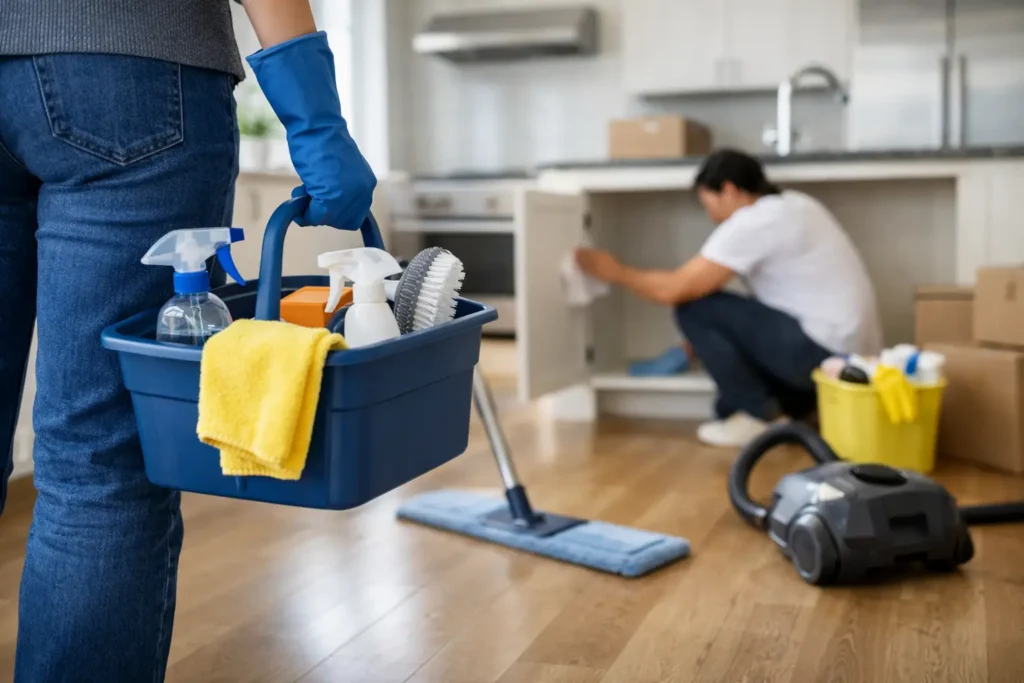
The best time to clean a new home properly is before the first box comes through the door. Once furniture is in place, wardrobes are full and the kitchen is working at full speed, every overlooked shelf, greasy cupboard top and dusty skirting board becomes harder to reach. If you are wondering how to deep clean home before moving in, the simplest approach is to work methodically while the property is still empty.
A proper move-in clean is not just about making the place look better. It is about starting fresh. You are dealing with dust from removals, marks left by previous occupants, possible food residue in the kitchen and the general build-up that hides in corners, switches, handles and flooring. Even a property that appears tidy can still need a much deeper clean than expected.
How to deep clean home before moving in without wasting time
The mistake most people make is starting with random jobs. They wipe one cupboard, then move to the bathroom, then start mopping before the dust has settled. That usually means doing the same work twice. A better method is to clean from top to bottom and from dry jobs to wet jobs.
Before you start, open windows where possible for ventilation. Gather cloths, a vacuum, mop, bucket, disinfectant, degreaser, glass cleaner, a limescale remover, sponges, bin bags and gloves. If the property has carpets, it also helps to decide early whether they need a quick vacuum, a spot clean or a full professional carpet clean. That choice affects the rest of the schedule.
If the property has been vacant for a while, expect extra dust. If it has just been refurbished, there may be fine building dust in places you would not normally check, including tops of doors, sockets and inside cupboards. That is where a more thorough approach really matters.
Start with the rooms that need the heaviest work
In most homes, the kitchen and bathrooms take the longest. Starting there makes sense because they involve grease, limescale and sanitising, not just dusting. Bedrooms and living areas are usually quicker once the heavier work is done.
Deep cleaning the kitchen before move-in day
The kitchen needs more than a quick wipe. Start at the highest points first. Dust light fittings, the tops of cabinets and extractor areas before cleaning surfaces below. If you skip this order, debris will drop onto worktops you have already cleaned.
Cupboards and drawers should be emptied completely, even if they look clean. Wipe inside and out, paying close attention to handles, hinges and shelf edges. Food crumbs, sticky marks and grease often collect in corners. A mild cleaner works for most units, but stronger degreaser may be needed around the hob area.
The oven is often the biggest job. If there is baked-on grease, this can take time, and it is one of the clearest areas where professional help may be worth it. A poor oven clean is obvious every time you cook. The same goes for the fridge and freezer. Clean seals, shelves, drawers and the exterior, and make sure everything is fully dry before use.
Worktops, splashbacks, taps and sinks should then be washed and sanitised. Pay attention to grout lines and around the tap base where grime can build up. Finish by cleaning skirting boards, the inside of any utility cupboards, and then the floor.
Bathrooms need detail, not just disinfectant
A bathroom can look acceptable at a glance and still need proper work. Limescale, soap residue and hidden mould are common. Start high again with vents, shelves and tiles, then move down to mirrors, sink, toilet, shower and bath.
Use the right product for limescale if taps, shower screens or tiles are marked. Scrubbing endlessly with the wrong cleaner wastes time. Around toilets, pay attention to the base, flush handle and surrounding floor. In showers, clean tracks, seals and corners as these are often missed.
If mould is minor, it may be manageable with the right treatment and ventilation. If it is widespread, that points to a larger issue and not just a cleaning problem. That is one of those situations where cleaning improves appearance, but the underlying cause still needs attention.
Bedrooms and living areas are easier in an empty property
Once kitchens and bathrooms are under control, the rest of the home becomes more straightforward. Dust all surfaces from top to bottom, including curtain rails, light fittings, door frames, window sills, radiators and skirting boards. Built-in wardrobes should be cleaned inside and out before any clothes go in.
Pay close attention to touch points. Light switches, sockets, door handles and banisters are handled constantly but often missed during a standard clean. These details make a property feel properly fresh rather than simply tidy.
For windows, clean internal glass, frames and sills. If there are sticky marks from tape, labels or previous decorations, remove those before polishing. Marks on paintwork can often be wiped gently, but it depends on the finish. Some painted walls mark easily, so aggressive scrubbing can make things worse.
Floors can change the whole feel of a home
Flooring is where the final result really shows. Hard floors should be vacuumed first, including along edges and corners, then washed with the correct product for the surface. Too much water can damage some materials, especially laminate and certain wood floors, so more solution is not always better.
Carpets need honest assessment. A quick vacuum may be enough in a nearly new property, but if there are odours, visible staining or signs of previous heavy use, a deeper clean is usually worth doing before furniture arrives. Once beds and sofas are in place, arranging carpet cleaning becomes more inconvenient and less thorough.
Hidden areas people often forget
If you want to know how to deep clean home before moving in properly, focus on the spots most people ignore. These are often the difference between a basic clean and a genuinely fresh start.
Behind appliances, inside extractor filters, around boiler cupboards, on top of doors, inside window tracks and along skirting board edges all collect dirt surprisingly quickly. The same applies to plug sockets, switches and the inside of bins if any have been left behind.
You should also check under sinks and around pipework. These areas can reveal old leaks, mildew or leftover grime that would otherwise sit unnoticed until the property is fully occupied. Cleaning them now is faster and gives you a clearer picture of the condition of the home.
When doing it yourself makes sense and when it does not
Some move-in cleans are manageable in a day. Others turn into a much larger job once you start opening cupboards and checking appliances. That usually depends on the size of the property, its condition and how much time you have before moving day.
If the home is already in decent shape, a focused DIY clean can work well. If the property has been rented out, left empty for months, recently renovated or simply not cleaned to a high standard, bringing in trained cleaners can save a lot of time and frustration. This is especially true for oven cleaning, carpet cleaning and after-builders style dust removal.
For landlords, letting agents and busy homeowners, convenience matters as much as results. A professional deep clean means the job gets done quickly, thoroughly and before the disruption of moving in begins. That can be the difference between a stressful first week and a smooth start.
A simple order for move-in cleaning
If you are short on time, keep the sequence simple. Start with ventilation and rubbish removal, then dust high surfaces, clean kitchens and bathrooms thoroughly, move through bedrooms and living spaces, and finish with flooring. Leave the final floor clean until the end so you are not walking dirt back through the property.
If services are being arranged, book them in the right order. For example, if carpets are being professionally cleaned, it makes sense to do that after dusty jobs are finished but before furniture arrives. The same goes for specialist oven or deep kitchen cleaning.
In Birmingham, many people moving into rental homes or newly purchased properties find that a professional one-off clean is the quickest way to make the place feel like their own. That is especially useful when moving dates are tight and there is already enough to manage.
A clean home before move-in day is not about perfection for its own sake. It is about making the property comfortable, hygienic and ready for real life from the moment you walk in with your keys. If you can do that before the unpacking starts, everything that follows feels easier.