
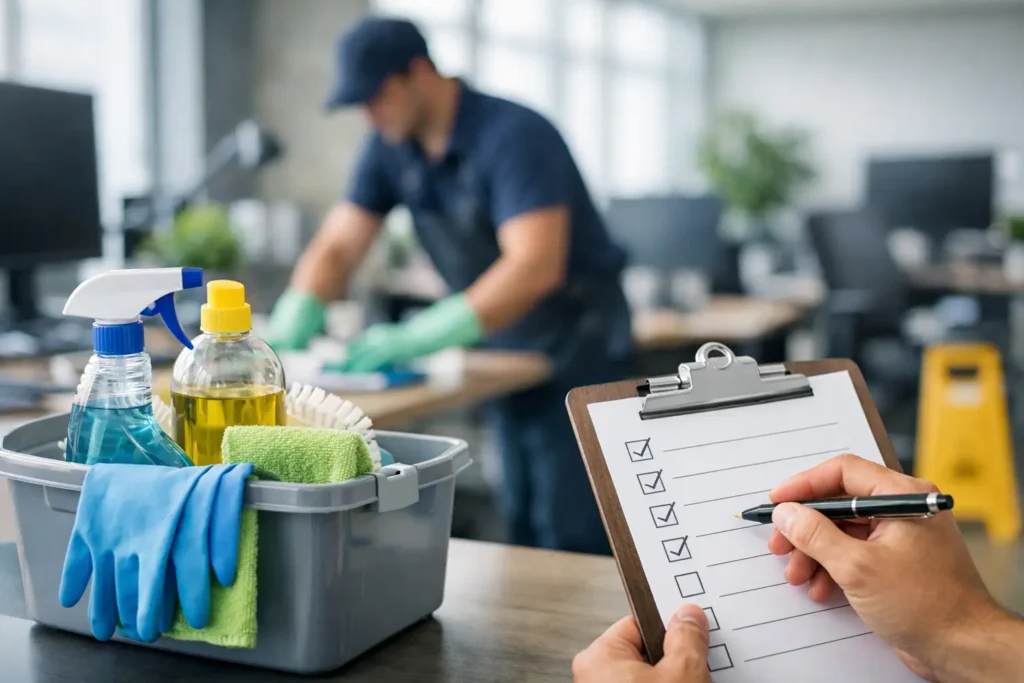
A clean office is easy to take for granted – right up to the point staff start noticing dusty desks, marked washrooms or overflowing bins. That is exactly why an office cleaning service checklist matters. It gives you a clear standard, helps prevent missed jobs and makes it far easier to judge whether your cleaning service is delivering what your workplace actually needs.
For most businesses, the issue is not whether cleaning gets done. It is whether the right tasks are being done at the right time, in the right areas, and to a consistent standard. A small office with light footfall needs something different from a busy workplace with meeting rooms in constant use, shared kitchens and customer-facing reception areas. A good checklist brings structure to all of that.
Why an office cleaning service checklist matters
When office cleaning is vague, standards slip. One cleaner may focus on visible surfaces while another spends time on floors and bins. Both may be working hard, but without a checklist, there is no shared expectation. That often leads to complaints about the same issues – fingerprints on glass, low soap supplies, dirty skirting boards or neglected corners.
A proper checklist also protects your budget. If you are paying for regular cleaning, you need to know what is included, how often it is carried out and where deep cleaning starts to become a separate service. That clarity helps avoid confusion later, especially if your office grows, moves premises or changes working patterns.
It also supports hygiene and presentation. Staff notice when kitchens are kept properly, visitors notice reception areas, and clients notice meeting rooms. A cleaner office sends a simple message that the business is organised and takes standards seriously.
What to include in your office cleaning service checklist
The most useful office cleaning service checklist is not the longest one. It is the one that matches the building, the number of people using it and the level of traffic in each space. Daily tasks should cover visible cleanliness and hygiene. Weekly and periodic tasks should deal with build-up that does not need attention every single day but still affects overall standards.
Reception and entrance areas
This is the first area people see, so it usually needs frequent attention. Floors should be vacuumed or mopped depending on the surface, entrance glass should be checked for marks, bins should be emptied, and desks or counters wiped down. If your entrance gets heavy footfall, especially in wet weather, floors may need more than one clean in a day.
Mats also matter more than many businesses expect. If they are dirty or saturated, they stop doing their job and the rest of the office suffers. A checklist should make clear whether mat cleaning or replacement is included.
Desks, workstations and general office areas
These areas need a practical balance. In many workplaces, cleaners will wipe accessible desk surfaces, but they will not move confidential paperwork or expensive equipment. That means the checklist should state clearly what counts as an accessible area and what staff need to keep clear if they want a thorough clean.
Chairs, skirting boards, internal glass, switches, door handles and telephones may also need scheduled attention. Not all of these need daily cleaning, but leaving them out entirely often leads to a workplace that looks clean at first glance while still feeling dusty or tired.
Kitchens and staff break areas
If there is one part of an office that quickly causes frustration, it is the kitchen. Sinks, taps, worktops, cupboard fronts, tables and appliance exteriors should all be included. Floors need regular mopping, and bins should be emptied before odours become a problem.
The main trade-off here is responsibility. A cleaning service can keep the kitchen clean, but it cannot compensate for staff leaving food waste, unwashed mugs and spills throughout the day. A checklist works best when it separates what the cleaners cover from what employees should handle themselves.
Toilets and washrooms
Washrooms should never be left to assumptions. Toilets, basins, mirrors, taps, dispensers, doors and floors all need defined cleaning frequency. Consumables matter too. Soap, toilet roll and hand towels should be checked and restocked as part of the service if that is included in your agreement.
This is one of the clearest examples of where frequency matters more than just task list length. A washroom cleaned thoroughly twice a week may still be unacceptable in a busy office. For high-use facilities, daily cleaning or more frequent checks are often the right standard.
Meeting rooms and shared spaces
Meeting rooms can appear tidy while still being poorly maintained. Tables should be wiped, chairs straightened, bins emptied, glass checked and floors cleaned. Shared touchpoints such as remotes, screens and door handles may need extra attention, particularly in rooms used by visitors.
If your business hosts clients on site, these rooms deserve more focus than they sometimes get. They can shape a visitor’s view of the business in a matter of minutes.
Daily, weekly and periodic cleaning tasks
One common mistake is trying to put every task into a daily plan. That usually creates either unrealistic expectations or rushed cleaning. A better approach is to split your checklist by frequency.
Daily cleaning typically includes bins, washrooms, kitchens, floors in high-traffic areas, touchpoints and basic surface cleaning. Weekly tasks may include more detailed dusting, spot-cleaning walls, polishing glass partitions and cleaning less-used spaces. Periodic tasks often cover carpet cleaning, deep kitchen cleaning, internal window cleaning, high dusting and upholstery care.
That structure keeps standards high without paying for unnecessary repetition. It also gives you a better way to compare quotes. If one provider looks cheaper, check whether they have simply excluded tasks that another company schedules monthly or quarterly.
Questions to ask before agreeing the checklist
A checklist only works if both sides understand it the same way. Before you book, ask what is included in the standard office clean, what counts as a deep clean, whether consumables can be supplied, and how access is managed if cleaning happens outside office hours.
It is also worth asking who checks quality. Some businesses want a simple cleaner sign-off sheet. Others prefer supervisor inspections or regular reviews. Neither approach is automatically better – it depends on the size of the premises and how closely you need the service monitored.
If your office has specialist needs, raise them early. That might include IT-heavy workstations, secure areas, medical-style hygiene requirements, or floors that need specific products. A generic checklist is rarely enough for those environments.
Signs your current checklist is not working
If you are dealing with repeated complaints, the problem may not be the cleaner alone. It may be the checklist. When instructions are unclear, standards become inconsistent and both sides get frustrated.
Typical warning signs include areas that are always missed, confusion over what is included, staff raising the same hygiene issues, or a workplace that looks fine in the morning but deteriorates quickly. Another red flag is when the cleaning schedule has not changed even though your office use has. Hybrid working, team growth and client visits can all change what the building needs.
This is where a local provider with commercial experience can make a difference. A company such as YG Cleaners Birmingham will usually assess the actual site, footfall and room usage before suggesting a plan, rather than forcing every workplace into the same template.
How to make the checklist work in practice
The best checklist is one people actually use. That means it should be clear, realistic and easy to review. Room-by-room works well for most offices, especially if each area has its own cleaning frequency. There should also be a simple process for reporting issues between scheduled visits.
It helps to review the checklist after the first few weeks. You may find some tasks need to happen more often, while others can be reduced. Seasonal changes can affect this too. Entrances often need more attention in winter, while kitchens may need closer management in warmer months.
Keep in mind that cleaning standards and business needs can shift over time. A provider that offers flexible booking, straightforward communication and a broad range of one-off and regular cleaning services will usually save you time in the long run. If you need extra support before an inspection, after office works or ahead of a client event, it should be easy to add that without starting from scratch.
A good office cleaning service checklist is not just paperwork. It is the difference between hoping your office stays presentable and knowing exactly how that standard will be maintained. If your current cleaning arrangement feels vague, this is usually the first thing worth fixing. Clear expectations make better workplaces.
Pingback: Is Professional Carpet Cleaning Worth It? | YG CLEANERS