
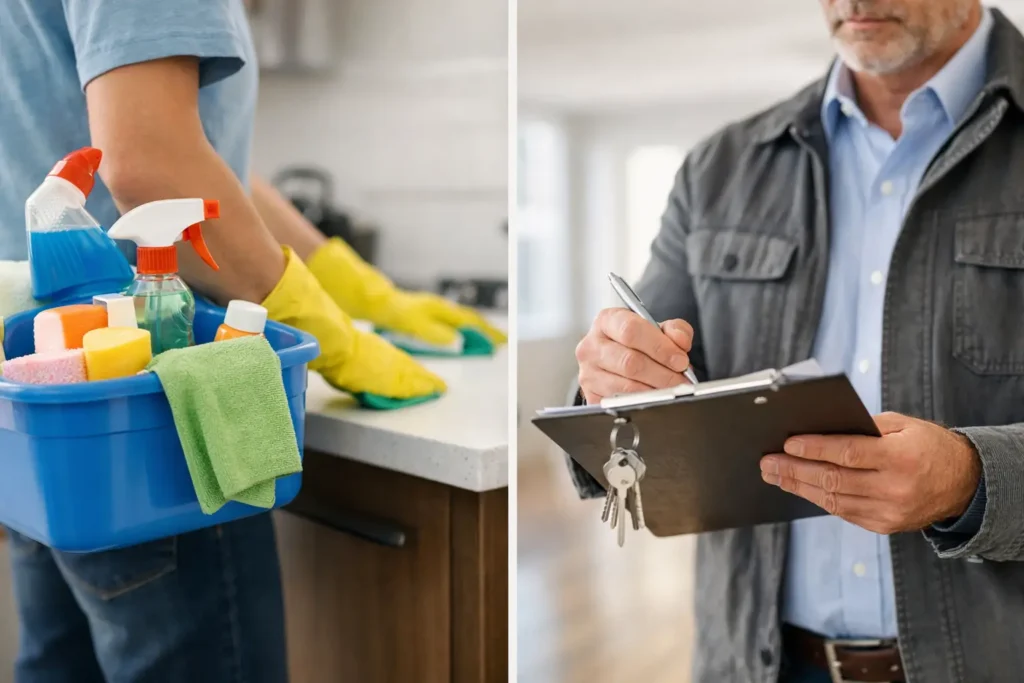
Most deposit disputes do not start with serious damage. They start with a cooker, a carpet stain, or a bathroom that was left almost clean rather than properly clean. That is why understanding tenant cleaning versus landlord cleaning responsibilities matters before a tenancy ends, not after keys have been handed back.
If you are a tenant, landlord or letting agent, the line can look obvious until there is a checkout report in front of you. In practice, cleaning responsibility depends on the tenancy agreement, the inventory, the condition at move-in and the difference between poor cleaning and fair wear and tear. Getting that wrong can cost time, money and avoidable arguments.
Tenant cleaning versus landlord cleaning responsibilities at a glance
A simple way to look at it is this. Tenants are usually responsible for leaving the property in the same standard of cleanliness as it was in at the start of the tenancy, allowing for fair wear and tear. Landlords are usually responsible for fixing underlying issues, maintaining the structure and systems of the property, and dealing with cleanliness problems caused by repairs, neglect of maintenance, or conditions outside the tenant’s control.
That sounds straightforward, but the detail matters. If a tenant leaves grease in the oven, limescale in the shower and rubbish in cupboards, that is generally a tenant issue. If mould keeps returning because of a long-standing leak, damaged extractor fans or structural damp, that is less likely to be solved by asking for a better clean.
What tenants are usually expected to clean
In most tenancies, tenants are expected to keep the property reasonably clean during the tenancy and return it cleaned at the end to a similar standard to the check-in condition. That often includes vacuuming carpets, wiping skirting boards and surfaces, cleaning kitchen units inside and out, degreasing the oven if required, cleaning bathrooms, removing rubbish and making sure floors are washed.
If the property was professionally cleaned before move-in and this is documented, the expectation at move-out is often higher. It does not always mean a tenant must hire a professional cleaning company, unless the agreement and local rules make that appropriate, but it does mean the result needs to match the starting condition. A quick surface tidy usually will not be enough.
Tenants are also normally responsible for stains or dirt caused during their occupancy. That could mean food spillages on carpets, soap buildup, greasy splashbacks, marked walls, or neglected appliances. The key point is whether the issue comes from use and cleaning standards, rather than age or property defects.
End of tenancy cleaning and the real standard expected
This is where many disputes happen. Tenants often think a property only needs to be “clean enough” for the next person. Landlords and agents usually assess it against recorded condition. If the inventory says the oven was professionally cleaned, the carpets were spotless and the bathroom was free from limescale, the checkout inspection is likely to compare against exactly that.
That does not mean everything has to look brand new. An older carpet may still show wear, and sealant may be discoloured with age. But dust on blinds, greasy cupboards, food left in the fridge and soap residue on tiles are cleaning issues, not ageing.
What landlords are usually responsible for cleaning or rectifying
Landlords are not expected to deep clean a property after a tenant who has left it dirty and then absorb that cost as routine business. But they are responsible for presenting and maintaining a property that is safe, fit to live in and properly repaired.
That includes issues such as leaks, damp caused by structural defects, faulty ventilation, pest entry caused by gaps or damage, and mess created by maintenance or building works. If a contractor has carried out repairs and left dust and debris behind, that is not something a departing tenant should be charged for. If a property has ingrained problems that no normal domestic clean would fix, those usually sit with the landlord.
There is also a difference between cleaning and replacement. A landlord may need to replace worn flooring, redecorate tired walls, renew silicone sealant or update an old appliance. Those are not cleaning tasks a tenant can reasonably be expected to solve with more elbow grease.
Fair wear and tear is not dirt
This point is central. Fair wear and tear covers the gradual decline in condition from normal use over time. It can include flattened carpet pile in walkways, minor scuffs, faded paint, worn worktops and older fixtures that simply show age.
A tenant should not usually be charged because a ten-year-old carpet no longer looks fresh. But if that same carpet has fresh stains, heavy odour or obvious ground-in dirt beyond normal use, the issue shifts back towards cleaning or damage.
Where grey areas usually cause disputes
The hardest cases are the ones that sit between cleaning, maintenance and wear. Mould is a common example. Sometimes it is linked to lifestyle and inadequate ventilation. Sometimes it is caused by poor insulation, leaks or defective extraction. Often it is a bit of both. Blaming either side too quickly tends to lead nowhere.
Carpets can be similar. If they were already tired at move-in, a landlord cannot usually expect replacement cost from a tenant because the colour has dulled further. But if there are new stains or a clear need for professional carpet cleaning caused by the tenancy, that may be a valid deduction.
Gardens also create confusion. If a tenancy agreement says the tenant must keep the garden maintained, basic mowing, weeding and tidying may be expected. Major landscaping, rotten fencing or overgrowth caused by long-term neglect before the tenancy is another matter.
How to judge responsibility fairly
The best evidence is usually the simplest. Start with the signed inventory and check-in report. Then compare the checkout condition room by room. Photos help, but only if they are clear and dated. Receipts for professional cleaning can also support the position of either side.
It is also worth asking one practical question. Is this a cleaning issue, a maintenance issue, or an ageing issue? If the answer is cleaning, it usually sits with the tenant. If the answer is maintenance or defect, it usually sits with the landlord. If it is ageing through ordinary use, it often falls under fair wear and tear.
This is also why vague tenancy clauses can cause trouble. A line saying a tenant must leave a property in a “good condition” is less useful than clear wording tied to cleanliness and inventory standards.
Why professional cleaning can save money on both sides
For tenants, a proper end of tenancy clean can be cheaper than losing part of a deposit over missed details. Kitchens, ovens, bathrooms and carpets are common problem areas because they take time and need the right products and method. A rushed DIY clean often looks fine at first glance but fails at inspection level.
For landlords and agents, using a professional cleaner means faster turnaround, more consistent standards and less time arguing over whether a property is ready for new occupants. It also helps when there is a short gap between tenancies and presentation matters.
In busy rental markets such as Birmingham, delays cost money. A property that is clean, fresh and ready to market is easier to re-let than one waiting on snagging jobs, recleans and checkout disputes. That is one reason many landlords and tenants choose a professional service rather than treating end of tenancy cleaning as an afterthought.
A practical approach to tenant cleaning versus landlord cleaning responsibilities
If you are a tenant, check your agreement early, review the inventory and be honest about the standard required. If the property was handed over in strong condition, aim to return it that way. If time is tight, booking a professional clean before checkout can remove a lot of risk.
If you are a landlord, make sure the check-in condition is properly documented and your expectations are realistic. Cleaning deductions should be based on evidence, not assumption, and they should never be used to offset general ageing or unresolved maintenance issues.
If you are managing several properties, consistency matters even more. Clear reports, prompt inspections and reliable cleaning support make the whole process smoother for everyone involved.
When the question is tenant cleaning versus landlord cleaning responsibilities, the right answer is rarely about who can argue hardest. It is about what was agreed, what was recorded and what condition the property is genuinely in. Get those three things right, and the end of a tenancy becomes much simpler for everyone.