
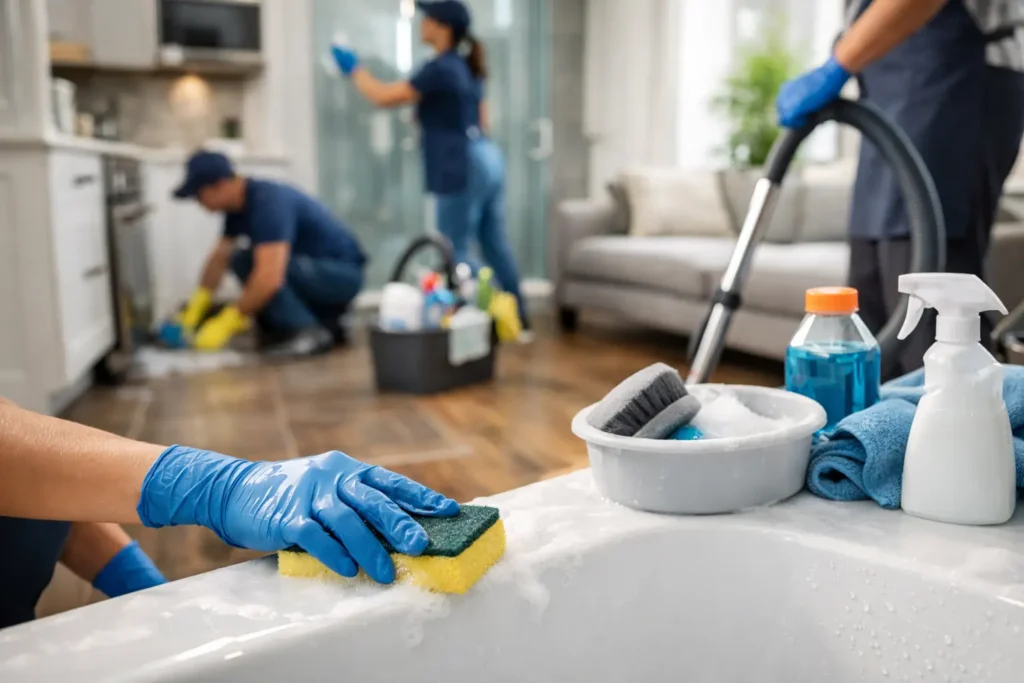
If you have ever looked around your home and thought, “It’s clean, but it still doesn’t feel properly clean,” you are usually talking about the gap between a standard tidy-up and a true deep clean. When people ask what is considered a deep clean for a house, they are usually asking how far the cleaning really goes, what gets included, and whether it is worth bringing in professionals to do it properly.
A deep clean is more than wiping surfaces, running the hoover round, and giving the bathroom a quick once-over. It means cleaning the visible areas and the places that are easy to miss during weekly maintenance. The aim is to remove built-up dust, grease, grime, limescale, and bacteria from the whole property, not just make it look presentable for a day or two.
What is considered a deep clean for a house?
In practical terms, a deep clean covers the detail work that regular cleaning often skips. That usually means behind furniture where accessible, inside kitchen appliances where needed, around skirting boards, on doors and door frames, light switches, tiles, grout, bathroom fittings, and other high-touch or high-build-up areas. It is a more thorough, labour-intensive service designed to reset the home to a much higher standard.
For most households, regular cleaning is about upkeep. A deep clean is about bringing the property back under control. That is why it is often booked before guests arrive, after illness, at the start of a regular cleaning schedule, before moving in, after moving out, or when a home has simply fallen behind.
What a deep clean usually includes
The exact scope depends on the size of the property, its condition, and whether there are any add-on services such as carpet cleaning or oven cleaning. Still, there are some core tasks most people would reasonably expect.
In kitchens, deep cleaning usually focuses on grease, food residue, and hidden dirt. Cupboard fronts, worktops, sinks, taps, splashbacks, tiles, and exterior surfaces are cleaned carefully. Hob areas need extra attention because grease settles there quickly. Appliances are often cleaned externally as standard, while internal appliance cleaning may be included only if agreed in advance. Ovens, fridges, and microwaves can require separate treatment depending on their condition.
In bathrooms, a deep clean normally means descaling and sanitising rather than just wiping over surfaces. Toilets, basins, baths, shower screens, tiles, taps, and grout all need proper attention. Soap scum, limescale, and mould spots are the usual problem areas. A standard clean may make a bathroom look fresher, but a deep clean tackles the build-up that changes how hygienic the room actually feels.
In living rooms, bedrooms, hallways, and communal areas, the work is more detailed than many people expect. Skirting boards, internal window ledges, frames, doors, handles, sockets, switches, and hard-to-reach corners are cleaned properly. Dusting is done beyond eye level, so cobwebs, top edges, and neglected surfaces are dealt with too. Floors are vacuumed and mopped thoroughly, often with extra care around edges and under accessible furniture.
This is also where the difference between a domestic cleaner’s weekly visit and a one-off deep clean becomes obvious. The deep clean is slower, more methodical, and focused on areas that affect the overall standard of the property.
What is not always included in a house deep clean
This is where confusion often starts. Many customers assume a deep clean covers absolutely everything in the property, but that is not always the case. Some tasks need to be requested separately because they involve specialist tools, extra time, or a different service type.
Carpet cleaning is a common example. Vacuuming carpets is usually part of the clean, but stain treatment and machine carpet cleaning are normally separate services. The same goes for upholstery cleaning. Oven cleaning may be included in some deep-clean packages, but often it is priced separately because heavily soiled ovens take much longer than general kitchen cleaning.
External windows, high-access areas, after builders debris, and biohazard-related cleaning also sit outside what many standard deep-clean appointments cover. If a property has not been cleaned for a long time, has pet odours, heavy mould, or severe grease build-up, the service may need to be tailored rather than treated as a straightforward deep clean.
That is why clear quoting matters. A professional company should tell you what is included, what needs extra time, and what falls under another service. It saves disappointment on the day and helps you book the right job first time.
When a deep clean makes the most sense
Not every home needs a deep clean every week. In fact, most do not. For many households, it works best as a periodic reset, followed by regular maintenance.
A deep clean is often the right choice when you are moving into a property and want everything properly sanitised before unpacking. It also makes sense when tenants are handing back a property, especially if the place needs to meet landlord or letting agent expectations. Spring cleaning, post-renovation recovery, and preparing for a new baby are also common reasons.
There is also a simpler reason that should not be ignored – life gets busy. Work, school runs, pets, visitors, and everyday mess can build up faster than expected. Even if you stay on top of the basics, deep cleaning jobs can keep getting postponed because they take time and effort. Booking a professional clean gives you a practical reset without losing your weekend to scrubbing bathrooms and degreasing kitchen surfaces.
Deep clean vs regular clean
A regular clean is designed to maintain a home that is already in decent condition. It typically covers general dusting, wiping surfaces, vacuuming, mopping, and cleaning bathrooms and kitchens at surface level. That works well if it is done consistently.
A deep clean goes further into the detail. It is more intensive and usually takes longer because the cleaner is dealing with built-up dirt rather than everyday light mess. If a regular clean keeps standards steady, a deep clean raises the standard first.
That is why many professional cleaning companies recommend a deep clean before starting recurring domestic cleaning. It creates the right baseline. After that, weekly or fortnightly visits are much more effective because the home is being maintained rather than rescued.
How to tell if your house needs a deep clean
You usually notice it before you say it out loud. The home may look tidy, but it still feels dusty, tired, or slightly grimy. The kitchen may smell clean for an hour and then go back to smelling of cooking residue. Bathrooms may still look dull even after you wipe them down.
Other signs are easier to spot. Limescale on taps, grease around cupboards, marks on doors and switches, dusty skirting boards, grime in grout lines, and neglected corners all point to the same issue. If you are cleaning often but never feel fully on top of it, that often means the property needs a more thorough reset rather than another quick surface clean.
Why professional deep cleaning is often worth it
You can deep clean a house yourself, but the real issue is usually time, energy, and consistency. A proper deep clean is not a two-hour job, especially in family homes or rental properties. It takes planning, method, and the willingness to tackle unpleasant areas most people put off.
Professional cleaners bring structure to the job. They know where build-up hides, which products suit different surfaces, and how to work efficiently without cutting corners. That matters if you want reliable results, especially before a tenancy change, a property inspection, guests arriving, or the start of regular cleaning.
For households and landlords in Birmingham and the West Midlands, using an experienced provider such as YG Cleaners Birmingham can also simplify the process. Instead of booking separate help for general cleaning, oven cleaning, carpets, or a move-related clean, you can get a clear quote and arrange the right service quickly.
What to ask before you book
Before booking any deep clean, ask what is included, how long the job is likely to take, and whether the quote covers the full property condition as it stands now. If there are particular concerns such as an oven, carpets, hard water staining, pet hair, or post-building dust, mention them upfront.
It is also sensible to ask whether cleaning materials are provided and whether the service is designed for owner-occupied homes, tenancy cleans, or post-renovation work. The more specific the booking, the better the result.
A deep clean should leave your home feeling reset, not just tidied. If the service is clearly explained and properly matched to the property, you get far better value and far less hassle.
A clean house is one thing. A deeply cleaned house feels lighter, fresher, and easier to keep on top of afterwards – and that is usually the point where people realise it was worth doing properly.