
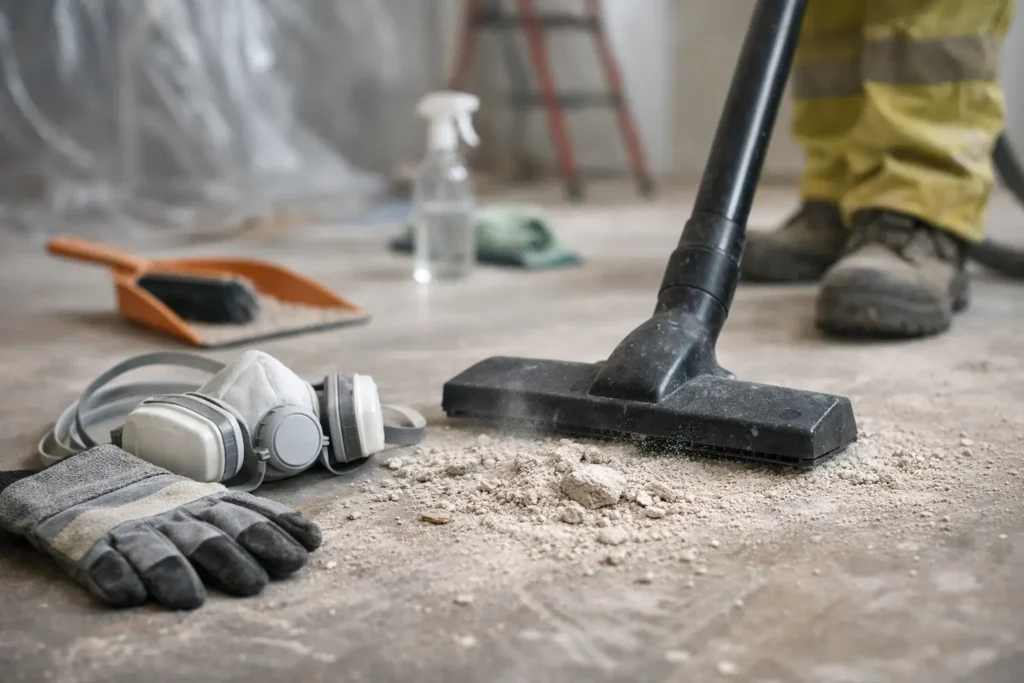
Fresh plaster, cut timber and a quick sand-down can make a room look nearly finished, but the dust left behind is where the real work starts. If you need to remove builder dust safely, the main priority is stopping fine particles from spreading through the property and back into the air while you clean.
Post-build dust is not like everyday household dust. It is finer, travels further and settles in places you would not expect, from skirting boards and sockets to the tops of doors and inside cupboards. If you rush in with a dry cloth or a standard vacuum, you can make the problem worse.
Why builder dust needs a careful approach
Builder dust often contains plaster, drywall residue, wood particles and general construction debris. Depending on the work completed, it can also include traces of silica from masonry or concrete dust, which is one reason careful handling matters. Even when the job looks minor, the dust can irritate eyes, skin and airways.
There is also the issue of recontamination. Fine dust settles in layers. Clean one surface badly and it can simply lift into the air and land somewhere else a few minutes later. That is why a safe clean is usually a staged clean rather than one quick pass around the room.
For landlords, tenants and homeowners, there is a practical concern too. Builder dust clings to paintwork, flooring, upholstery and appliances. Use the wrong method and you can scratch surfaces or grind grit into carpets and hard floors.
What to do before you start
Before you begin, ventilate the space properly if conditions allow. Open windows where possible, but avoid creating a strong through-draught that blows dust from one room to another. If the property has multiple affected areas, close internal doors to contain the mess and work one room at a time.
Wear suitable protection. At minimum, that usually means a proper dust mask rated for fine particles, gloves and eye protection if there is heavy residue. Old clothes are sensible, but the main point is reducing inhalation and contact while you work. If anyone in the property has asthma, allergies or another respiratory condition, it is best they stay away until cleaning is finished.
You should also remove what you can from the room first. Soft furnishings, loose fabrics, ornaments and small items are easier to clean properly outside the dust zone. This helps you get to hidden areas and stops clean items becoming dusty again.
The equipment that makes the job safer
To remove builder dust safely, the right tools matter more than people often realise. A vacuum with a good filtration system, ideally one designed for fine dust, is far more effective than a basic domestic model. Standard vacuums can blow very fine particles back into the room, especially if filters are poor or overdue for replacement.
Microfibre cloths work well because they trap dust rather than just pushing it around. You will also need a bucket of clean water, a gentle cleaning solution suited to the surfaces involved, and plenty of spare cloths or mop heads. Using dirty water halfway through the job just spreads residue.
For hard floors, a damp mop is useful after vacuuming, but only once loose debris has been removed. On carpets, the approach depends on how much dust is present. A careful vacuum with the correct attachments is usually the first stage, and sometimes repeated passes are needed.
How to remove builder dust safely, step by step
The safest method is to clean from top to bottom and from dry removal to damp finishing. Start high, with ceilings, light fittings, curtain rails and the tops of cupboards. If you begin with the floor, dust from above will simply undo your work.
Vacuum first wherever possible. Use a soft brush attachment on walls, skirting boards, window ledges and other solid surfaces where dust has settled visibly. Work slowly. Fast movements can disturb particles and send them airborne again.
Once the loose dust has been lifted, wipe surfaces with a slightly damp microfibre cloth. The cloth should be damp, not wet. Too much water can turn plaster dust into a paste and smear it across painted walls, woodwork or glass. Rinse and change cloths regularly.
Glass, mirrors and glossy surfaces often need more than one pass because builder dust leaves a film behind. The same goes for kitchen units, bathroom fittings and internal doors. In newly finished spaces, check edges and handles carefully, as dust collects around joins and corners.
Sockets, switches and vents need extra care. Never soak these areas. Instead, use a dry or barely damp cloth around them and vacuum gently with an appropriate attachment. Safety comes first around electrics.
Floors, carpets and soft furnishings
Flooring usually holds the heaviest build-up, but the right method depends on the material. On hard floors, vacuum thoroughly before any mopping. If grit is still present when you mop, you risk dragging it across the surface and leaving scratches, especially on laminate, vinyl and finished wood.
For tiled floors, grout lines can trap a surprising amount of dust, so a second vacuum and mop may be needed. On wood floors, keep water use minimal and dry the surface properly afterwards.
Carpets need patience. Fine dust settles deep into fibres, and one quick vacuum is rarely enough. Use slow, overlapping passes and empty the vacuum regularly if the dust level is heavy. If the carpet was exposed during major works, a professional clean may be the better option, especially if there are visible marks as well as dust.
Sofas, dining chairs and mattresses can also collect builder dust. Upholstery attachments help, but if fine particles have spread through several rooms, it is often quicker and more reliable to deal with soft furnishings as part of a full after-build clean rather than treating them separately.
The areas people miss most often
Builder dust has a habit of settling in the least obvious places. Tops of doors, behind radiators, inside wardrobes, along skirting edges, window tracks and inside drawers are common misses. If work has happened in a hallway or landing, dust may have travelled into nearby rooms that looked unaffected at first glance.
Kitchens and bathrooms need particular attention because dust settles on functional surfaces. Cupboards may need emptying and wiping inside. Extractor covers, taps, tiles and toilet bases can all hold a fine residue that becomes obvious only when the light hits it.
In offices and commercial spaces, dust can affect keyboards, monitors, shelving and reception furniture. That matters not only for cleanliness but for presentation. A newly improved workspace still looks unfinished if every surface has a chalky film.
When DIY cleaning may not be enough
Some jobs are manageable in-house. If one room had light decorating work and the dust is contained, a careful clean may be all that is needed. But if the property has had structural work, multiple trades on site, extensive sanding, plastering or cutting, the scale changes quickly.
The trade-off is time versus certainty. Doing it yourself may save money upfront, but it can take far longer than expected and still leave dust in hidden areas. For landlords preparing a property, tenants trying to get settled quickly, or businesses that need rooms ready for use, professional after builders cleaning is often the more practical route.
A trained team can usually work faster because they bring the right equipment, follow a methodical process and know where dust tends to settle. That is especially helpful when deadlines matter, such as before viewings, handovers or reopening a workspace.
A practical option when time is tight
If the dust is widespread or you simply want the property ready without the hassle, booking a professional service can save a lot of repeat cleaning. Companies such as YG Cleaners Birmingham handle after builders cleaning with the tools, products and experience needed for a more thorough result.
That kind of support is useful when you need more than a quick tidy-up. It means less disruption, fewer missed areas and a faster return to normal use of the space, whether it is a home, rental property or workplace.
Final checks before you call the job done
Once everything looks clean, leave the room for a short while and come back to inspect it in natural light if possible. Builder dust often shows up once the air has settled. Run a finger along skirting boards, door tops and window ledges. If there is still residue, repeat the vacuum-and-wipe process rather than jumping straight to heavier products.
Wash reusable cloths separately afterwards, replace or clean vacuum filters as recommended, and dispose of collected dust carefully. A proper finish is not just about appearance. It is about making the room comfortable, safe and genuinely ready to use again.
A clean-looking space after building work is one thing. A dust-free space you can breathe in comfortably is another, and that is always the standard worth aiming for.
Pingback: A Guide to After Builders Cleaning | YG CLEANERS