
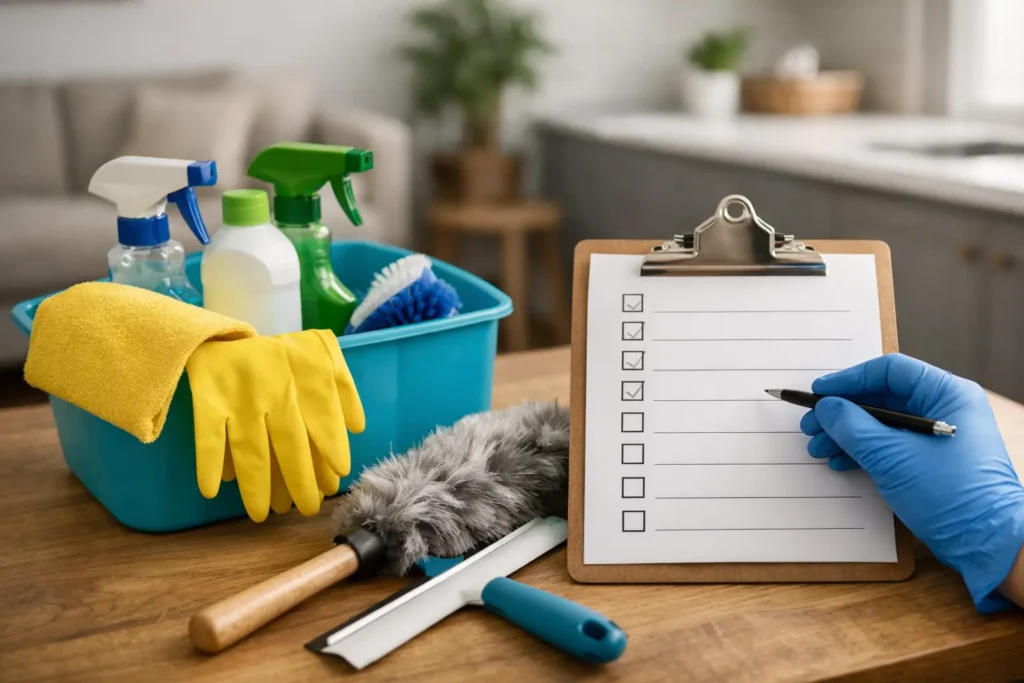
Miss one week of cleaning and most homes can recover. Miss three, and suddenly the bathroom needs scrubbing, the kitchen never looks clear, and dust seems to settle faster than you can wipe it away. That is why a regular home cleaning checklist matters – not as a perfect routine, but as a practical way to keep your home manageable, presentable and hygienic without wasting time.
For busy households, the goal is not to deep clean every room every day. It is to stay ahead of the jobs that build up quickly and spot the tasks that can wait. A good checklist helps you clean with purpose, avoid doubling back, and maintain a consistent standard whether you do it yourself or arrange professional support.
Why a regular home cleaning checklist saves time
Cleaning usually feels harder when there is no system. People often spend more time deciding what to do than actually doing it. A checklist removes that friction. Instead of wandering from room to room, you know what needs attention daily, what can be handled weekly, and what should be done less often.
It also helps with standards. If you share cleaning with a partner, older children, tenants or housekeeping support, everyone is working from the same expectations. That cuts down on missed jobs and avoids the common problem of one room getting constant attention while another is ignored for weeks.
There is another benefit too. Regular cleaning is usually easier and cheaper than occasional rescue cleaning. Grease that is wiped early comes off quickly. Limescale that is left for months takes far more effort. Carpets last better when dirt is removed before it settles deep into the fibres. In short, maintenance protects both your time and your home.
The right way to split your regular home cleaning checklist
The most practical approach is to break tasks into daily, weekly and monthly jobs. That keeps the routine realistic. If everything sits on one long list, it becomes overwhelming and gets postponed. If jobs are grouped by frequency, you can stay consistent without feeling like you are always cleaning.
Daily jobs that stop mess building up
Daily cleaning should be light and targeted. You are not trying to make the house spotless. You are simply preventing the usual pressure points from getting out of hand.
In the kitchen, clear worktops, wipe surfaces, wash up or load the dishwasher, and give the sink a quick clean. If you cook most evenings, a fast wipe of cupboard fronts and the hob also makes a difference. Grease and crumbs are much easier to deal with on the day than later in the week.
Bathrooms benefit from short, regular attention too. Wiping the basin, rinsing the shower screen or tiles, and giving the toilet a quick once-over keeps the room fresher and reduces staining. In family homes, this small daily effort often saves a much bigger scrub at the weekend.
Living areas and bedrooms need simple resets. Put items back where they belong, fold throws, straighten cushions, and deal with obvious dust or crumbs. If shoes, bags and post collect near the entrance, spend two minutes putting them in place. That one habit can make the whole home feel cleaner.
Weekly tasks that keep standards high
Weekly cleaning is where the visible difference happens. This is the level most people think of as regular house cleaning, and it covers the jobs that maintain a proper standard across the home.
Vacuuming and mopping are usually top of the list. High-traffic floors need regular attention, especially in homes with children, pets or garden access. Dusting should include shelves, skirting boards, tables, television units and reachable surfaces that gather fine dust through the week.
In the kitchen, focus on a more thorough clean of cupboard fronts, splashbacks, appliance exteriors and the microwave. Change tea towels, empty bins properly and disinfect the areas that are touched often, such as handles and switches.
Bathrooms should be cleaned more fully once a week. That means the toilet, shower, bath, basin, mirror and floor. Soap residue, toothpaste marks and water splashes can make even a tidy bathroom feel neglected, so this room is worth treating as a priority.
Bedrooms usually need fresh bed linen, dusting, vacuuming under accessible areas and a quick check for laundry build-up. In rented properties or shared homes, regular bedroom cleaning also helps prevent odours and keeps the overall property in better condition.
A room-by-room cleaning checklist
Some people prefer cleaning by frequency, while others work better by room. If that sounds more practical for your household, use the checklist in that way instead.
Kitchen
The kitchen needs the most consistent attention because it deals with food, spills and daily traffic. Keep on top of washing up, wipe worktops, clean the sink, and empty bins before smells develop. Once a week, clean appliance surfaces, mop the floor properly and tackle spots that are easy to ignore, such as cupboard handles and the area around the hob.
If your oven is used heavily, do not wait until smoke or burnt-on grease becomes obvious. Light maintenance helps, but sometimes a professional oven clean is the faster option.
Bathroom
Bathrooms need both hygiene and appearance. Daily touch-ups keep them usable, but weekly cleaning should cover descaling taps, disinfecting the toilet, cleaning the shower or bath, polishing the mirror and mopping the floor. Ventilation matters here as well. If moisture lingers, mould can develop quickly around seals and grout.
Living room
This room often looks cluttered before it is actually dirty. Start by resetting the space – remove cups, fold blankets and clear surfaces. Then dust, vacuum and spot-clean marks on glass, tables or upholstery. If you have pets, hair and odour control may need more frequent attention than the average weekly plan.
Bedrooms
Bedrooms should feel calm rather than crowded. Change bedding, dust surfaces, vacuum floors and avoid letting clothes pile up. In smaller homes or flats, storage pressure can make rooms look messy even when they are clean, so part of the routine may be simply putting things away properly.
What people often forget
A useful checklist also covers the easy-to-miss jobs that affect the feel of a home. Light switches, door handles, bannisters and remote controls collect regular hand contact but are often skipped. The same goes for skirting boards, behind doors, under sofas and inside bins.
Then there are the tasks that do not need weekly attention but should not be left indefinitely. These include wiping inside the fridge, cleaning windows internally, dusting radiators, vacuuming mattresses, washing cushion covers and dealing with limescale in less visible areas.
This is where many households hit the limit of what they can manage consistently. Routine cleaning keeps things presentable, but periodic deep cleaning is often what restores the standard fully.
When a checklist is not enough on its own
A checklist works well when the home is already under reasonable control. If cleaning has slipped for a while, or the property is dealing with pets, renovation dust, heavy cooking residue or end of tenancy pressure, the better option may be to reset the property first and then maintain it.
That is often the difference between regular cleaning and one-off specialist cleaning. A weekly routine can keep bathrooms tidy and floors clean, but it may not lift carpet staining, remove baked-on oven grease or bring a property back to lettable condition after a move. In those cases, combining regular cleaning with occasional specialist support is usually the most efficient approach.
For households in Birmingham that need consistency without the hassle of managing it all themselves, YG Cleaners Birmingham can take that routine off your hands and keep standards in place with less disruption to your week.
How to make your checklist realistic
The best cleaning plan is the one that actually gets followed. If your schedule is packed, keep your daily list short and your weekly routine focused on the rooms that matter most. A spotless spare room is less urgent than a clean kitchen and bathroom.
It also helps to match the checklist to the property. A one-bedroom flat does not need the same routine as a busy family home. Pet owners may need more vacuuming. Landlords may care more about presentation between tenancies. Working households may prefer regular professional cleaning during the week instead of giving up part of the weekend.
There is no prize for making the checklist longer than necessary. The aim is a home that feels clean, functions well and does not drift into a bigger job than it should be.
A regular routine will never remove every cleaning job from your life, but it does stop cleaning from turning into a constant catch-up. Keep the checklist simple, stay consistent where it counts, and when the workload outgrows your time, get the right help before small jobs become bigger ones.