
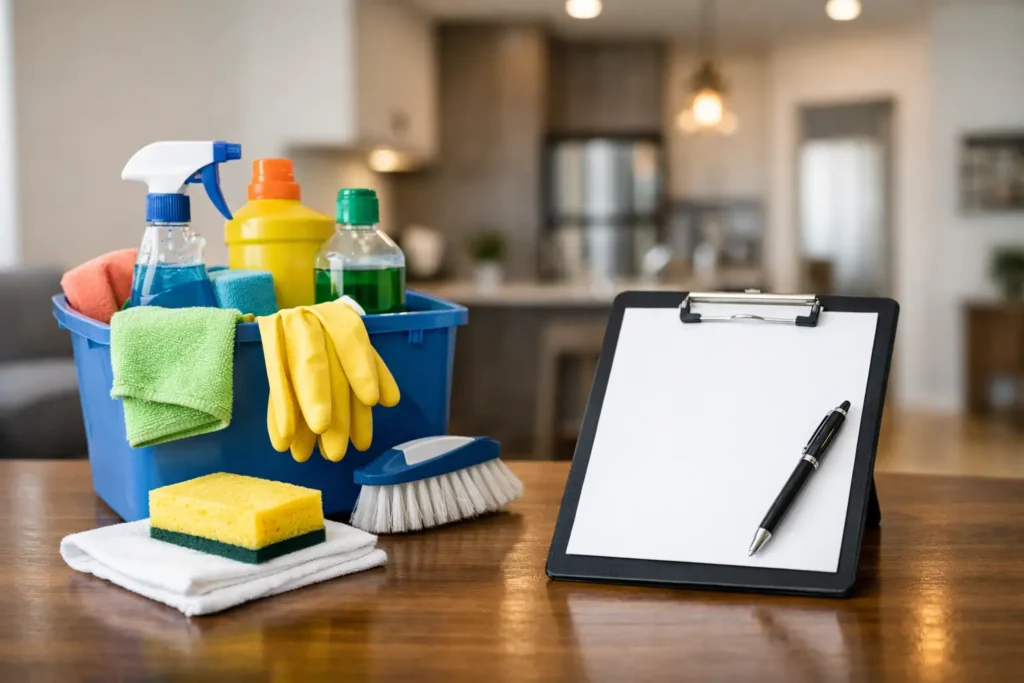
A stained oven, dusty skirting boards and a mould-marked bathroom can turn a routine changeover into a dispute in minutes. That is why a clear landlord cleaning responsibilities checklist matters. It helps landlords, letting agents and tenants understand what should be cleaned, when it should be done, and where responsibility starts and ends.
Why a landlord cleaning responsibilities checklist matters
Cleaning is one of the most common grey areas in rented property management. Landlords want the property returned in a good condition. Tenants want fair treatment and a realistic standard. Letting agents need a property ready for viewings and the next move-in without delay.
The problem is that cleaning expectations are often discussed casually and remembered differently later. A written checklist reduces that risk. It gives you a practical standard to work from, supports inventory checks, and makes it easier to spot the difference between poor cleanliness, fair wear and tear, and actual damage.
For landlords, the goal is not simply to have a property looking nice. A properly cleaned home presents better, photographs better, lets faster and helps protect fixtures, carpets and appliances from avoidable deterioration. In some cases, paying for a professional clean between tenancies is the quickest and most cost-effective option, especially when time is tight.
What landlords are usually responsible for cleaning
Landlords are generally responsible for providing a property that is clean, safe and fit to live in at the start of a tenancy. That does not mean every rented property must be brought to showroom condition, but it should be hygienic, reasonably clean throughout and ready for occupation.
In practical terms, that usually means kitchens, bathrooms, floors, surfaces and supplied appliances should be cleaned before new tenants move in. If a property has been empty for a while, dust, cobwebs and stale odours also need attention. If previous tenants have left behind heavy grease, limescale, rubbish or stained carpets, landlords should deal with that before handing over the keys.
There is also a maintenance overlap. If mould is caused by a leak, failed extractor fan or another repair issue, it is not just a cleaning task. Likewise, if an oven does not work properly because of a fault, cleaning alone will not solve the problem. A good checklist should keep cleaning and maintenance connected rather than treating them as separate worlds.
Landlord cleaning responsibilities checklist for each area
Entrance, hallways and stairs
These areas set the tone for the whole property. Landlords should make sure floors are vacuumed or mopped, marks are removed where possible, handrails are wiped down and any leftover rubbish is cleared. Light switches, door handles and internal glass should also be clean.
If communal access is involved, responsibility may depend on the building arrangement. In a block of flats, landlords may only control the inside of the property, while shared hallways are managed elsewhere. It depends on the lease and management setup.
Living rooms and bedrooms
Supplied rooms should be free from dust, cobwebs and visible dirt. Carpets should be vacuumed thoroughly, hard floors cleaned, and any furnished items wiped down. Wardrobes, shelves, window sills and skirting boards are often missed, but they are among the first places tenants notice during check-in.
Curtains and blinds should be presentable and not carrying heavy dust. If mattresses or upholstered furniture are included, they should be sanitary and in a clean condition. Where staining or odour is significant, professional carpet or upholstery cleaning may be the sensible route.
Kitchen
The kitchen is where most disputes begin because standards are easy to judge. Worktops, cupboards, drawer interiors, sinks, taps, splashbacks and flooring should all be cleaned before a new tenancy starts. Grease build-up on extractor hoods, cupboard tops and tiles should not be left for incoming tenants.
Supplied appliances deserve special attention. The oven, hob, grill, microwave, fridge, freezer, washing machine and dishwasher should be emptied and cleaned if they are part of the let. Fridges should be sanitised and free from old food smells. Ovens should not be handed over with burnt-on grease from previous occupation.
Bathroom and toilets
Bathrooms need to be hygienic, not simply tidy. That means toilets descaled and disinfected, baths and showers cleaned, sinks polished, mirrors wiped and floors washed. Soap residue, hair, mildew and limescale should be removed as part of the pre-tenancy clean.
Grouting, seals and extractor vents are worth checking too. If black mould keeps returning because ventilation is poor, that points back to property maintenance. A clean bathroom should also have a working standard behind it.
Windows and interior finishing touches
Internal window glass, frames and ledges should be cleaned, particularly where dust and condensation marks have built up. Landlords are not always expected to provide full external window cleaning before every tenancy, but if accessible ground-floor windows are dirty enough to affect presentation, it is worth addressing.
The same applies to light fittings, radiators, sockets and switches. These are smaller details, but they affect the overall impression of care. If you want a property to let quickly, clean detail matters.
What tenants are usually responsible for
During the tenancy, tenants are normally expected to keep the property reasonably clean and look after it in a tenant-like manner. That includes routine tasks such as wiping surfaces, cleaning bathrooms, vacuuming floors and dealing with everyday rubbish.
At the end of a tenancy, tenants are usually expected to return the property in a similar level of cleanliness to how it was received, allowing for fair wear and tear. That phrase matters. It means landlords cannot expect a tired ten-year-old carpet to look new because it has been cleaned. Equally, tenants cannot leave thick grease in the kitchen and call it normal use.
The strongest protection for both sides is a detailed inventory with photographs from check-in and check-out. Without that, cleaning claims become harder to prove and easier to challenge.
Where landlords often get caught out
One of the biggest mistakes is assuming a quick surface clean is enough between tenancies. It rarely is. New tenants open cupboards, inspect bathrooms closely and notice lingering smells straight away. If the property feels neglected, it affects trust before the tenancy has properly begun.
Another issue is trying to treat all cleaning as tenant fault. Sometimes the real cause is age, disrepair or poor ventilation. A stained sealant line, damaged flooring or recurring damp problem cannot be fixed with spray and a cloth. If you want to avoid complaints, cleaning standards and property standards need to move together.
Timing is another practical problem. Landlords often leave cleaning until the last possible moment, then discover that carpets need specialist treatment or the oven requires a proper deep clean. That can delay viewings and move-ins. If you manage multiple properties or fast turnarounds, booking professional help early saves time and stress.
When professional cleaning makes more sense
There are times when doing it yourself is fine, especially if the property has been well kept and only needs a light refresh. But where there is heavy kitchen grease, stained carpets, post-build dust, pet odours or a tight turnaround, professional cleaning is usually the better investment.
It is faster, more consistent and easier to document. For landlords and agents, that matters because speed affects void periods. A property that is genuinely ready to market stands a better chance of attracting stronger tenants quickly.
This is especially useful for end of tenancy cleaning, oven cleaning and carpet cleaning, where standards tend to be inspected more closely. For busy landlords in Birmingham, using one reliable provider for multiple cleaning services can be simpler than arranging separate contractors and hoping the timing lines up.
How to use this checklist in practice
Start with the inventory. Before a tenancy begins, record the cleaning standard room by room and take clear photographs. Use plain language rather than vague notes like clean enough. Specific descriptions are more useful if a disagreement appears later.
Before a tenant moves out, compare the property against the original record and separate three things clearly – cleaning issues, wear and tear, and damage. This avoids unfair deductions and keeps conversations factual. If extra cleaning is needed, get it done promptly so the property is ready for the next stage, whether that is maintenance, viewings or a new tenancy.
If you prefer a straightforward option, bringing in a trained cleaning team can remove the guesswork. A company such as YG Cleaners Birmingham can handle one-off deep cleans as well as specialist services, which is useful when a standard tidy-up simply will not do.
A good landlord cleaning responsibilities checklist is less about paperwork and more about keeping your property presentable, your standards clear and your next tenancy off to the right start.
Pingback: 9 Spring Cleaning Service Benefits | YG CLEANERS