
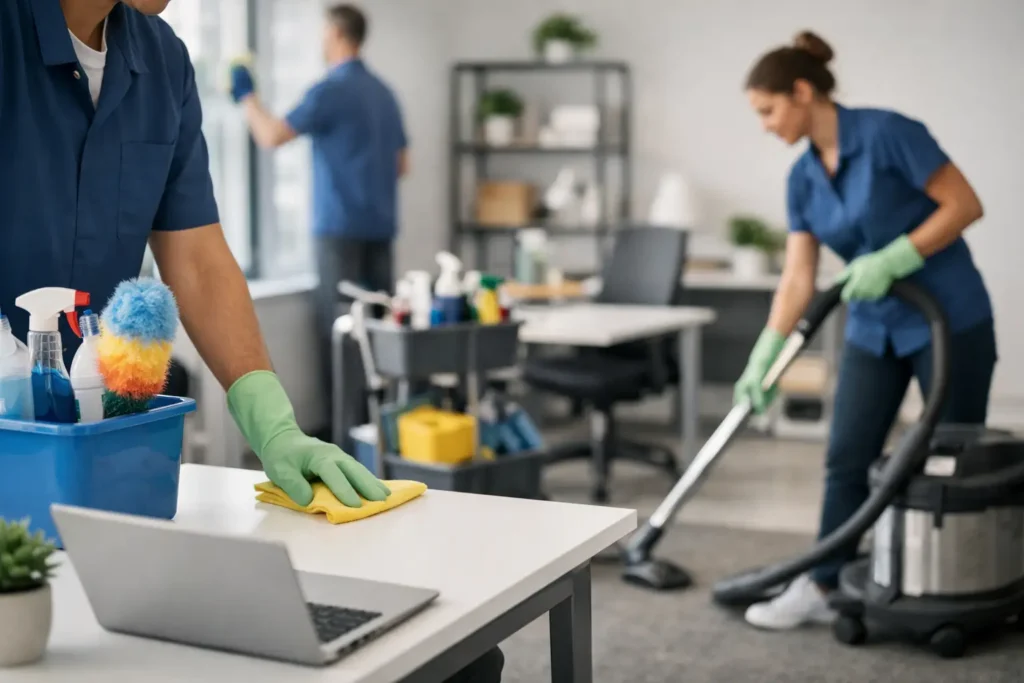
If your office has six desks, one kitchenette and a meeting room that doubles as a storage space, mess builds up faster than most teams expect. Commercial cleaning for small offices is not just about appearances. It helps you keep shared areas hygienic, reduce distractions, and avoid the slow slide from tidy workplace to cluttered, dusty, hard-to-manage space.
Small offices often have a particular problem. They are too busy to clean properly in-house, but not large enough to justify a full-time cleaner. That leaves business owners, office managers and staff trying to patch things together between meetings, deliveries and deadlines. It may work for a week or two. It rarely works for long.
Why commercial cleaning for small offices matters
A small office has less space to absorb dirt, odours and clutter. When one bin is full or the kitchen worktop is left uncleaned, the whole premises feels neglected. In a larger building, those issues can be less visible. In a smaller office, they are front and centre.
There is also the question of hygiene. Shared desks, door handles, toilets, taps, kettles and fridge handles are all high-contact points. If they are not cleaned regularly, germs move quickly through the team. That can mean more sick days, lower morale and an office that does not feel particularly pleasant to work in.
Presentation matters too. Whether clients visit daily or only once a month, your office says something about how your business runs. Clean floors, dust-free surfaces and fresh washrooms signal professionalism. If the reception area looks tired or the meeting room smells stale, that impression lands before you say a word.
What small offices usually need
Not every workplace needs the same cleaning schedule. A five-person admin office will have different needs from a busy sales office with regular visitors. The right plan depends on headcount, layout, footfall and how the space is used.
In most cases, commercial cleaning for small offices covers the basics that keep the premises consistently presentable. That usually includes vacuuming and mopping floors, wiping desks and surfaces, cleaning toilets, emptying bins and tidying kitchen areas. Regular touchpoint cleaning can also be built in, especially where several people share equipment or workstations.
Some offices also need occasional deeper work. Carpets can hold odours and dust long after they stop looking dirty. Kitchen appliances get greasy. Washroom grout and hard floors can lose their clean finish over time. A regular maintenance clean handles the day-to-day standard, but periodic deep cleaning keeps the office from gradually slipping below it.
Regular cleaning vs one-off deep cleaning
This is where many small businesses misjudge what they need. A one-off clean can reset the space, but it does not solve the ongoing issue if no one maintains it afterwards. On the other hand, if your office is already in decent condition, a regular weekly or twice-weekly clean may be enough without starting with a major deep clean.
It depends on the current state of the premises. If there is built-up grime, neglected washrooms or heavily marked flooring, a deeper initial clean often makes sense. After that, routine visits are more effective because cleaners are maintaining a standard rather than trying to recover one.
The real benefit is consistency
The biggest advantage of hiring professionals is not that they clean once. It is that the job gets done properly and repeatedly, without relying on whoever happens to be free at the end of the day.
That consistency matters in small offices because everyone notices when standards slip. A missed week can be obvious. Dust gathers on skirting boards, kitchen bins overflow, washrooms lose freshness and the whole workplace starts to feel less organised. A dependable cleaning schedule removes that burden from your team and keeps standards steady.
For many local businesses, convenience is just as important as the cleaning itself. Straightforward booking, flexible times and quick quoting make a practical difference. You do not want to spend days chasing contractors or managing complicated arrangements for a modest office space.
How often should a small office be cleaned?
There is no single answer, but there are some clear patterns. Offices with daily staff attendance, shared toilets and regular kitchen use usually benefit from at least weekly cleaning. If the office has more foot traffic, customer visits or a larger team using a compact space, two or three visits a week may be more realistic.
A quieter office used only on certain days may need less frequent cleaning, especially if staff work hybrid schedules. Even then, washrooms, bins and kitchen areas still need attention. Leaving long gaps between cleans can create more work and higher costs later.
The most cost-effective setup is usually one that matches the actual use of the office. Too little cleaning means standards drop. Too much cleaning means paying for visits you do not really need. A good cleaning provider should help you judge the right frequency based on the premises rather than push a one-size-fits-all contract.
Signs your current setup is not working
If staff are wiping down surfaces themselves every morning, your schedule is probably too light. If meeting rooms are presentable but washrooms are inconsistent, the scope may be wrong rather than the frequency. And if the office looks fine at first glance but smells stale by midweek, the issue may be ventilation, bins, carpets or kitchen upkeep rather than general tidying.
These details matter because effective cleaning is not only visual. A clean office should feel fresh, orderly and easy to use.
What to look for in a cleaning provider
Small businesses do not need unnecessary complexity. They need a provider that turns up on time, follows the agreed brief and keeps standards consistent. Trained cleaners matter because commercial spaces have different expectations from domestic properties. Washrooms, shared equipment, high-touch surfaces and client-facing areas all need proper attention.
Responsiveness is another major factor. If you need to change visit times, add a one-off deep clean or request extra support after works have been carried out, you want a company that can act quickly. That is often where a reliable local provider has an advantage, especially for businesses that want fast quotes and straightforward communication.
It also helps to work with a company that can cover more than one cleaning need. A small office may need regular cleaning most of the time, then occasional carpet cleaning or a deeper refresh after maintenance work. Keeping those services under one roof is simpler than coordinating multiple contractors.
Cost matters, but value matters more
Every small business watches overheads, and rightly so. But the cheapest quote is not always the best value. If cleaners rush the job, miss key areas or show up inconsistently, you are not saving money. You are paying for a problem that still exists.
A better way to judge value is to look at reliability, the standard of work, how clearly the service is defined and how easy the company is to deal with. For a small office, practical service often matters more than an elaborate package. You want a clean workplace without wasting management time.
That is why flexible service is useful. Some offices need a simple recurring clean. Others need regular visits plus occasional extras at key times of year. The right arrangement should fit the business, not force the business to fit the cleaning plan.
Commercial cleaning for small offices in Birmingham
For businesses in Birmingham, using a local cleaning company can make things easier. Faster quoting, better availability and a clearer understanding of local business needs all help when you need a service that is prompt and dependable. If your office is small, you do not want to feel like an afterthought behind larger commercial contracts.
YG Cleaners Birmingham works with businesses that need practical, professional support without unnecessary delays or complicated booking. That suits small offices well, especially when reliability and convenience are as important as the cleaning itself.
A clean office supports better working habits
There is a knock-on effect that often gets overlooked. When the office is cleaned properly and regularly, staff tend to keep it in better order between visits. Desks are cleared, cups are taken to the kitchen, bins get used properly and shared spaces stay more manageable. In other words, regular cleaning helps the whole office run better.
That does not mean every office will stay spotless all week. Real workplaces get busy. Papers pile up, people rush, and the kitchen takes a hit by Wednesday afternoon. But a consistent cleaning routine creates a standard people are more likely to respect.
If your office cleaning has become reactive rather than planned, that is usually the point to change it. The best time to sort it out is before the grime becomes normal and before your staff start treating a tired office as something they just have to put up with. A small office should be easy to keep clean with the right support behind it.