
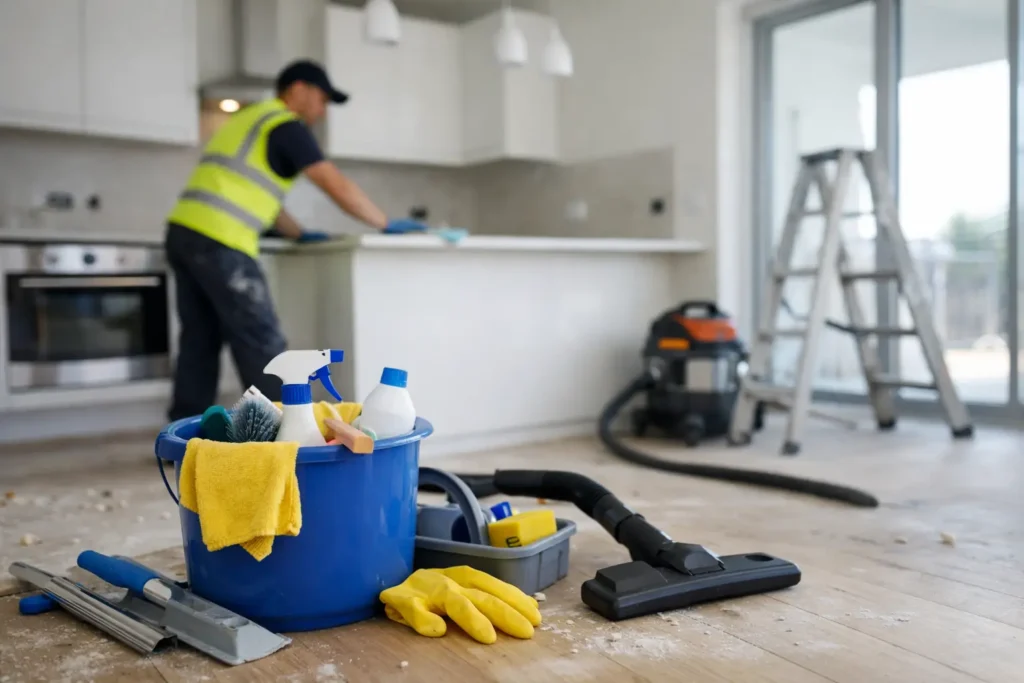
Fresh plaster, new flooring and a finished refurbishment should feel like the final step. Instead, many properties are left with fine dust on every surface, adhesive marks where they should not be, and debris tucked into corners, sockets and skirting boards. This guide to after builders cleaning explains what the job really involves, why standard cleaning is rarely enough, and how to get a property ready for living, letting or working again without wasting time.
What after builders cleaning actually means
After builders cleaning is not just a quick tidy after trades leave. It is a detailed clean designed to remove building dust, leftover materials and the residue that comes with renovation, fitting work, decorating and repairs. That can include plaster dust, sawdust, paint splashes, silicone smears, stickers on glass, grout haze and general debris.
The reason it needs a different approach is simple. Building dust behaves differently from normal household dirt. It settles in layers, travels further than expected, and returns even after a basic wipe-down if it has not been removed properly from high and low surfaces. A kitchen refit, loft conversion, office refresh or even a single-room renovation can all create more mess than most people expect.
For landlords, letting agents and business owners, there is also a presentation issue. A newly improved property still looks unfinished if the dust is visible on window sills, radiators, light fittings and flooring. For homeowners, it often means the space cannot be used comfortably until the clean is done properly.
A guide to after builders cleaning by stage
The best results come from treating the clean as a process, not one rushed visit with a vacuum and a mop. In most cases, the job starts with waste and loose debris removal. This does not mean handling heavy builders waste that should have been cleared by the contractor, but it does include collecting smaller remnants, packaging, dust piles and bits of material left behind.
The next stage is dry removal of dust. This is where many people go wrong. If surfaces are wiped too early with a damp cloth, fine dust turns into a paste and becomes harder to remove. A proper after builders clean usually starts with careful vacuuming using the right attachments, especially around edges, skirting boards, frames, ledges and soft furnishings if any are already in place.
Once the loose dust is under control, detailed surface cleaning begins. That includes doors, architraves, shelves, sockets, switches, internal glass, window frames, counters and fitted units. Kitchens and bathrooms need extra attention because splashes, grout residue and sealant marks are common after installation work. Floors are usually left until late in the process so they are not re-soiled while upper surfaces are being cleaned.
A final finishing stage makes a real difference. This is where remaining smears, fingerprints and dull patches are removed so the property looks ready rather than merely less dusty. For commercial premises, this can matter as much as the practical cleaning itself. Clients, staff and visitors notice presentation straight away.
What often gets missed
Even when a property looks clean at first glance, there are common problem areas. Tops of doors, behind radiators, inside cupboards, around extractor fans and along skirting boards collect a surprising amount of fine dust. Light fittings, blinds and internal window tracks are also easy to overlook.
Another issue is residue on hard surfaces. Paint specks on glass, plaster on flooring edges or stickers left on newly fitted units can make the job look unfinished. Removing these marks takes care and the right method. Too much force can scratch a surface, especially on modern fittings, polished floors and newly installed appliances.
When a standard cleaner is not enough
Not every cleaning job after building work needs a specialist team, but many do. It depends on the scale of the work, the type of dust, and how quickly the property needs to be ready. If a decorator has worked in one small room and the rest of the property is unaffected, a lighter clean may be enough. If walls have been sanded, tiles cut indoors or multiple trades have been on site, the clean usually needs more time and a more methodical approach.
This is particularly true in rental properties and workplaces. Landlords often need a home ready for viewings or a new tenancy with no delay. Offices, clinics and retail spaces may need to reopen quickly and safely. In those cases, speed matters, but so does getting it right first time. A rushed clean that leaves dust circulating through the air or settled on worktops creates more disruption later.
Homes, rentals and commercial sites have different priorities
For homeowners, the main goal is usually comfort and usability. People want to unpack, move furniture back and enjoy the improved space. For landlords and letting agents, the focus is often presentation, turnaround time and reducing complaints from incoming tenants. For businesses, appearance and hygiene tend to sit alongside operational downtime.
That is why after builders cleaning is never one-size-fits-all. A family home may need careful cleaning around existing furniture and belongings. An empty flat may need a full top-to-bottom reset before handover. A commercial property may need out-of-hours work to avoid interrupting staff or customers.
How to prepare for an after builders clean
A smoother clean starts before the cleaners arrive. If possible, ask the builder or contractor to remove large waste, leftover materials and tools first. Cleaners can then focus on dust and detailing rather than working around avoidable obstacles. It also helps to make sure water and electricity are available, as both are often needed to complete the job efficiently.
If there are newly fitted surfaces, flooring or appliances, pass on any care instructions. Some materials need specific treatment, and it is always better to know that in advance than risk damage. If the property is occupied, point out anything fragile or anything that should not be moved.
Good communication also saves time. Let the cleaning company know what work has been done, whether the property is furnished, and which rooms are the priority. If there is a deadline for moving in, reopening or handing over keys, say so from the start.
Choosing the right service
If you are comparing providers, do not focus on price alone. After builders cleaning can vary a lot depending on the size of the property, the amount of dust and the level of detailing required. A very low quote may only cover a basic clean, which is not the same thing.
Ask what is included, whether cleaners are experienced in post-renovation work, and how the service is assessed. Reliable companies will usually want to understand the scale of the job before giving a firm price. That is a good sign, not a delay tactic. It means the quote is more likely to match the work required.
For customers in Birmingham, using a local company can also make the process easier. Faster site visits, clearer communication and more flexible booking can all help when timing is tight. YG Cleaners Birmingham, for example, focuses on practical cleaning services that are easy to book and straightforward to arrange, which is exactly what many property owners need after building work has overrun.
Why timing matters more than most people think
Leaving builder’s dust too long can make the clean harder. Fine particles settle deeper into fabrics, corners and vents over time. Foot traffic also spreads dust into other areas, especially in occupied homes and offices. The sooner the clean is done once the trades are finished, the easier it is to restore the space properly.
There is a balance, though. Cleaning too early can be a waste if builders are still returning for snagging or final adjustments. The ideal point is after the messy work has fully stopped, but before the property goes back into normal use. That timing keeps the clean efficient and avoids paying twice for the same areas.
The result you should expect
A proper after builders clean should do more than make a room look acceptable from the doorway. The property should feel ready to use. Surfaces should be dust-free, floors properly cleaned, glass clearer, fittings wiped down and the whole space visibly fresher.
That does not mean every issue on site automatically becomes a cleaning matter. Damage, poor finishing and heavy waste disposal are separate issues and should be dealt with by the relevant contractor. But where the problem is dust, residue and presentation, the cleaning should leave a clear difference.
If your refurbishment is finished but the property still does not feel complete, the cleaning is probably the missing step. The right approach saves time, improves presentation and gets the space back to normal faster, which is often exactly what matters most.