
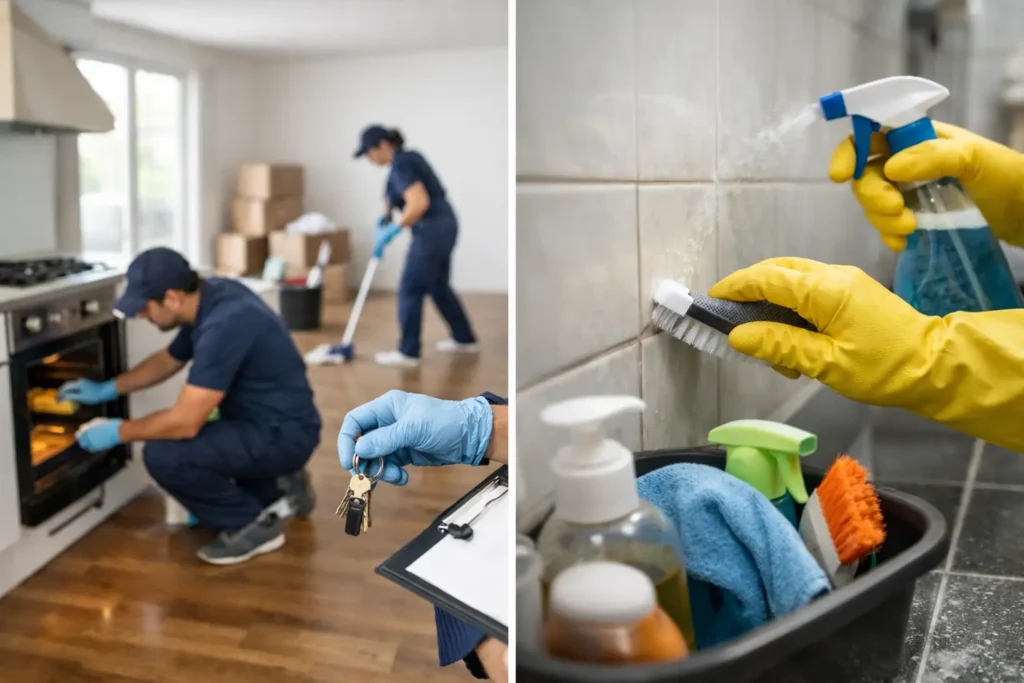
If you are comparing end of tenancy vs deep clean, you are usually working to a deadline, a standard, or both. Maybe you are a tenant trying to protect your deposit, a landlord getting a property ready for new occupants, or a homeowner who wants a proper reset rather than a quick tidy-up. The confusion is understandable because the two services overlap, but they are not the same thing.
A deep clean is a thorough clean that tackles built-up dirt, grease, limescale, dust and neglected areas throughout a property. An end of tenancy clean is more specific. It is designed around the condition a rented property needs to be left in at move-out or presented in at move-in, often with attention to letting expectations, inventory standards and areas that are commonly checked during inspections.
End of tenancy vs deep clean: what is the real difference?
The simplest way to look at it is this: a deep clean focuses on overall hygiene and presentation, while an end of tenancy clean focuses on handover standard.
That difference matters because a property can be deeply cleaned and still miss details that matter to a landlord or letting agent. Equally, some homes do not need a full tenancy-focused service if there is no rental inspection involved. The right option depends on what the property is for, how it has been used and what standard you need to achieve.
In practice, both services go beyond regular weekly cleaning. They target the places most people do not keep on top of during everyday life, such as skirting boards, behind appliances, inside cupboards, bathroom scale build-up and grease around cooking areas. Where they differ is in purpose, scope and expectation.
What an end of tenancy clean usually includes
An end of tenancy clean is built around moving out or preparing a rental property for new tenants. The aim is not just to make the place look better. It is to return it to a clean, presentable condition that stands up to inspection.
That usually means cleaning all rooms from top to bottom, with close attention to kitchens and bathrooms. Inside kitchen cupboards, worktops, sinks, splashbacks, tiles, taps and white goods are typically included. Bathrooms usually involve descaling, sanitising, polishing fixtures and removing soap residue or grime from neglected corners. Bedrooms and living areas are cleaned in detail, including internal glass, light switches, doors, frames and skirting boards.
In many cases, landlords and agents also expect the inside of the oven to be cleaned properly, and carpets may need professional cleaning if they are marked or holding odours. Upholstery, internal windows and even walls can come into the conversation depending on the tenancy agreement and the condition of the property.
The key point is that end of tenancy cleaning is outcome-driven. It is about meeting a standard linked to a handover, not just making the home feel fresher.
What a deep clean usually includes
A deep clean is also detailed, but it is more flexible. It is often booked when a home has fallen behind on regular cleaning, after illness, before guests arrive, after building work, or simply as a seasonal reset.
The cleaner will still work through the property thoroughly, paying attention to dirt build-up in kitchens, bathrooms and high-contact areas. Floors, surfaces, fittings and neglected spots are usually covered in much more detail than a standard clean. This can include behind and beneath furniture where accessible, dusting high and low areas, cleaning bathroom fixtures properly and dealing with stubborn kitchen grease.
What makes deep cleaning different is that it is not always tied to a checklist from a landlord or letting agent. It can be tailored more freely to the customer’s priorities. For example, a homeowner may care most about sanitising bathrooms, reviving the kitchen and removing dust throughout the house, but may not need every empty cupboard cleaned inside if they are still living there.
That flexibility makes deep cleaning a strong option for owner-occupied homes and for rented homes where the issue is general condition rather than move-out compliance.
When a deep clean is enough
A deep clean is usually enough when there is no tenancy ending, no formal inspection, and no need to clean an empty property to handover standard.
If you are staying in the property but want a more thorough clean than your usual routine provides, deep cleaning is often the better fit. The same applies if you have just bought a house and want it properly cleaned before settling in, or if your home has not had detailed attention for a while.
It can also work for landlords between occupancies in some situations, especially if the property has been well maintained and only needs a strong refresh rather than a full tenancy-style turnaround. But that is where experience matters. If there is any doubt about what level of cleaning is expected, it is better to check before booking the wrong service.
When end of tenancy cleaning is the safer choice
If you are moving out of a rented flat or house, an end of tenancy clean is usually the safer choice. It is designed for exactly that moment, when missed details can turn into deposit deductions or delays.
Landlords and letting agents are not just looking for obvious cleanliness. They often focus on whether the property is ready for the next occupant without extra work. That includes the inside of appliances, cupboard interiors, bathroom fittings, edges, corners and finish quality. A general deep clean may cover much of this, but if the service is not clearly geared towards tenancy standards, assumptions can cause problems.
For landlords, end of tenancy cleaning can also reduce turnaround time. If the property is being remarketed quickly, a proper move-out clean helps with viewings, new tenant satisfaction and first impressions. It is often cheaper and easier to do it thoroughly once than to fix complaints later.
End of tenancy vs deep clean: cost, time and value
Price is one reason people compare end of tenancy vs deep clean so closely. On the surface, they can look similar, especially in smaller properties. The difference is usually in labour time, level of detail and whether specialist tasks are included.
An end of tenancy clean often takes longer because the property may be empty, every room has to be brought to a presentable handover standard, and the checklist is less flexible. Deep cleaning can sometimes be adjusted to focus on the areas that need the most attention, which may affect the quote.
The better question is not which one is cheaper. It is which one avoids repeat work. Booking a deep clean when you actually need an end of tenancy clean can mean paying twice. Booking an end of tenancy clean for a home that only needs a reset may mean paying for a level of detail you do not need.
A fast, clear quote based on the size of the property, its condition and your end goal is usually the most practical way to decide.
How to choose the right service for your property
Start with the reason for the clean. If the property is being handed back to a landlord or prepared for a new tenant, choose end of tenancy cleaning. If you want a thorough clean for your own use, choose deep cleaning unless specific extras are needed.
Then think about condition. A lightly used property in good order may need less than a heavily lived-in home with grease, limescale, pet hair or stained carpets. Be realistic here. Underestimating the condition is one of the main reasons cleaning jobs run over or fail to meet expectations.
It also helps to think about what is and is not included. Oven cleaning, carpet cleaning and after builders cleaning are often treated as separate or additional services. If those areas matter, ask the question upfront rather than assuming they are covered.
For tenants, the tenancy agreement and inventory report are worth checking before booking. For landlords and agents, it makes sense to book a service that can handle the whole property in one go, especially when time between tenancies is tight. That is where a provider with a broad service range can save hassle.
A good cleaning company will not push a one-size-fits-all answer. They should ask what stage you are at, what standard you need and what condition the property is in before recommending the right service. That is the practical difference between a generic clean and a job planned properly from the start.
If you are still weighing up end of tenancy vs deep clean, focus on the result you need, not just the label. The right service is the one that leaves you with nothing left to sort afterwards.