
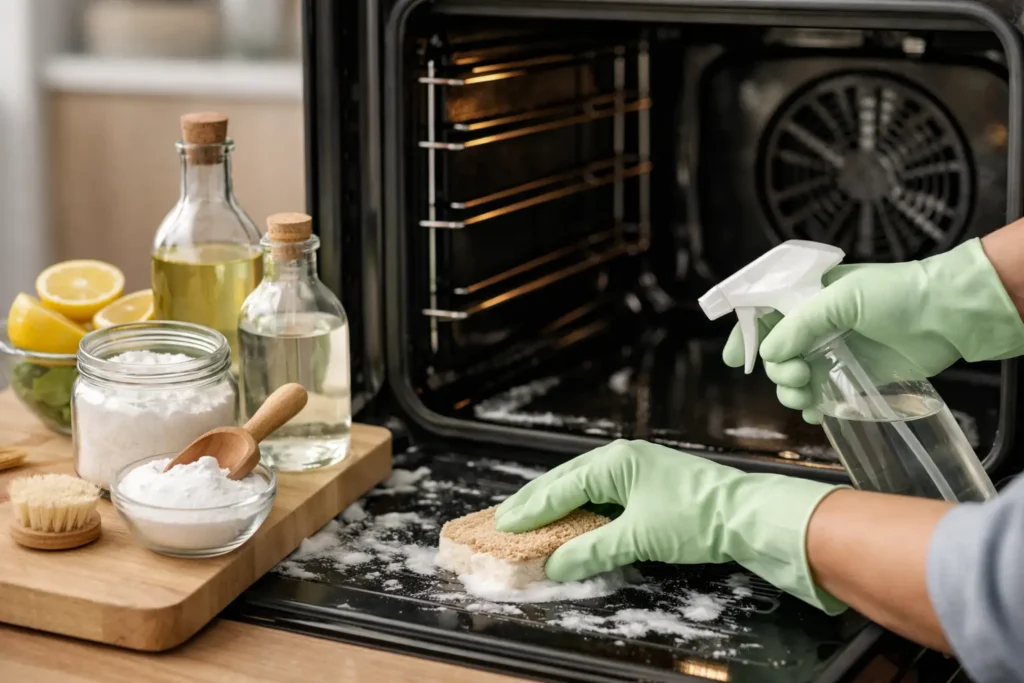
A dirty oven usually gets ignored until the smoke starts, dinner tastes slightly off, or you open the door and catch that burnt-grease smell again. If you want to clean oven without harsh chemicals, the good news is you do not need a cupboard full of aggressive sprays to get solid results. In most homes, a careful method, a bit of patience, and a few simple cleaning staples will do the job.
The key is being realistic about the level of build-up. A lightly used oven can often be freshened up in under an hour. An oven with months of burnt-on grease will take longer and may need a repeat treatment. That does not mean the natural approach does not work – it means dwell time matters.
Why many people want to clean oven without harsh chemicals
For families, tenants, and busy households, strong oven cleaners can be more trouble than they are worth. The fumes can be unpleasant, the residue needs careful removal, and if you have children or pets around, you may simply prefer a lower-chemical option.
There is also the practical side. Many shop-bought products promise a fast fix, but they still require scrubbing and ventilation. If you are cleaning regularly, using gentler methods can feel more manageable. You are less likely to put the job off when the process is straightforward and the kitchen does not smell like a chemical store afterwards.
That said, gentler cleaning is not always the fastest route. If the oven has not been touched in a year, you may save time by bringing in a professional oven clean. For regular upkeep, though, the lower-chemical method makes a lot of sense.
What you need before you start
You do not need specialist products. In most cases, warm water, bicarbonate of soda, white vinegar, washing-up liquid, microfibre cloths, rubber gloves, a non-scratch sponge, and a scraper suitable for oven glass are enough. An old toothbrush is useful for corners and around seals.
Before you begin, make sure the oven is fully switched off and cool. Remove the shelves and any loose trays. Lay an old towel or cloth on the floor in front of the oven if you want to catch drips and bits of loosened grime.
The simplest method for everyday grease and burnt residue
Start with the shelves. Soak them in hot water with washing-up liquid. If they fit in the sink, that is easiest. If not, a bath lined with an old towel can work well. Leave them to soak while you tackle the inside of the oven.
For the main cavity, mix bicarbonate of soda with a small amount of water until it forms a spreadable paste. You want it thick enough to cling to the surfaces, not run down them. Spread the paste over the greasy areas, avoiding heating elements and fans where possible. Pay attention to the base and the back panel, where splashes tend to bake on.
Then leave it alone. This is where many people rush the job. If you wipe it off too soon, you lose most of the benefit. Give it several hours if you can, or leave it overnight for heavier grime.
When the paste has had time to work, wipe it away with a damp cloth. You will probably need several passes, rinsing the cloth as you go. If residue remains, spray or dab a little white vinegar onto the area. It will react with the bicarbonate and help loosen what is left. Wipe again until the surfaces are clean.
For the shelves, scrub with a sponge or brush after soaking. Much of the grease should lift off easily. If some areas remain stubborn, the same bicarbonate paste can be used there too.
How to clean oven without harsh chemicals when the glass is the worst part
Oven glass often looks worse than the rest of the appliance because every mark is visible. Grease vapour, food splashes, and repeated heating create a cloudy, brown film that standard wiping barely touches.
A bicarbonate paste works well here too, but use a lighter hand. Spread a thin layer over the inside glass panel and leave it for 20 to 30 minutes. Wipe with a non-scratch cloth or sponge. If there are baked-on spots, a scraper designed for glass can help, but it must be used carefully and at the correct angle to avoid scratches.
Do not use anything too abrasive. It is tempting when the marks will not move, but rough pads can damage the finish and leave the glass looking worse. Patience usually gives a better result than force.
If your oven door has glass panels with grease trapped between them, that is a different job. Some models allow easier access than others. If the door design is awkward or you are unsure, it is safer to leave that part to a trained cleaner rather than risk damage.
Stubborn build-up needs a different expectation
Natural methods work best with time and repetition. If your oven has thick carbon deposits, blackened residue on the base, or years of overflow baked onto the sides, one treatment may not fully restore it.
In that situation, it helps to split the task into stages. First loosen what you can with the bicarbonate paste. Then wipe, repeat, and focus on the worst sections. You may get a very good improvement rather than a perfect showroom finish on day one.
That matters if you are nearing a property inspection or end of tenancy clean. Landlords and letting agents are not usually interested in how you cleaned the oven – they care about the result. If time is short, a professional service can often be the more practical option.
Common mistakes that make the job harder
The biggest mistake is starting with too much water. If the paste is runny, it slides off before it has time to break down grease. A thick paste stays in place and works longer.
The second is scrubbing too aggressively too early. Burnt-on grime softens gradually. If you attack it immediately, you waste effort and can damage surfaces.
Another common issue is forgetting the racks, seals, and edges around the door. Even if the main cavity looks cleaner, these areas can still hold odours and grease. A toothbrush and warm soapy water make a noticeable difference here.
Finally, many people clean the oven but do not remove the last traces of residue. After any treatment, wipe thoroughly with clean water and a fresh cloth. You do not want leftover paste drying onto surfaces before the next use.
Keeping the oven cleaner for longer
The easiest oven to clean is one that never gets heavily coated in the first place. That sounds obvious, but a few small habits make a real difference.
Wipe fresh splashes once the oven has cooled after cooking. Use trays when roasting foods likely to spit or leak. If something spills badly, deal with it before the next few heat cycles bake it solid. A quick wipe every week or two is far easier than a full rescue job every six months.
This is especially useful in busy family kitchens where the oven is used most days. Grease build-up happens gradually, so regular light cleaning saves both time and effort.
When a professional oven clean is the better call
There is nothing wrong with handling the job yourself, especially for maintenance cleans. But there are times when booking a professional is simply more efficient.
If you are moving out, preparing a rental property, dealing with severe grease build-up, or just do not have the time, a specialist clean can save you a lot of hassle. It is also a smart option if the oven has not been cleaned for a long period and you want a strong result without spending your weekend on it.
For households and landlords in Birmingham who need the oven sorted quickly and properly, that convenience matters. A professional service is not just about making the appliance look better. It can help remove lingering smells, improve presentation, and take one more difficult task off your list.
A practical routine that works
If you want a manageable approach, clean spills as they happen, give the glass a quick wipe every couple of weeks, and do a deeper bicarbonate-based clean every couple of months depending on use. That keeps the job under control and reduces the need for anything more aggressive.
If you fall behind, do not assume the only answer is a harsh chemical spray. In many cases, warm water, bicarbonate of soda, vinegar, and a bit of time will get the oven back to a very respectable standard. And if the build-up has gone beyond what you can reasonably tackle, getting help is often the most practical cleaning decision you can make.